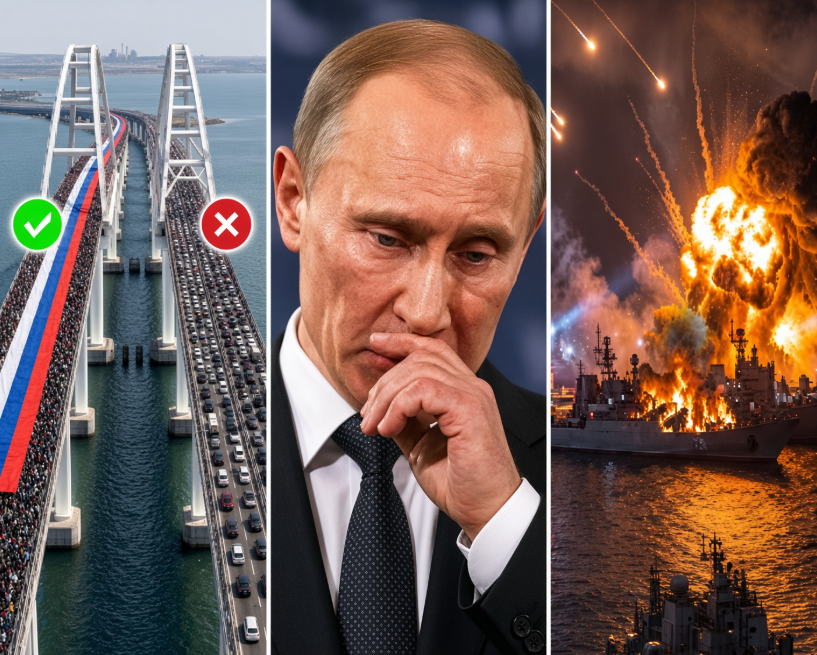
Ukraine’s Phase 2 tactical blockade is turning Crimea from a Russian strategic prize into an isolated logistical liability. Ukrainian forces have destroyed more than 285 Russian supply ships, triggering acute shortages of fuel, water, and food across the peninsula. The Kerch Bridge—Moscow’s main overland lifeline—has been repeatedly damaged, slashing military cargo traffic by over 70 percent and leaving Russian bases unable to reliably protect high-value assets.
Successive drone strikes on Saki airbase have destroyed Su-24 bombers and degraded aviation support. Simultaneously, the Black Sea Fleet has withdrawn most of its remaining ships from Crimean ports to Novorossiysk, conceding that Sevastopol and other Crimean harbors are no longer safe. With sea, air, and land routes under pressure, Russian garrisons face a tightening siege.
Military analysts, including retired U.S. Army Gen. Ben Hodges, have invoked a “1944 scenario”: an isolated force starved of supplies rather than defeated in a costly amphibious assault. Ukraine’s approach relies on long-range strikes, naval drones, and interdiction rather than a ground invasion of the peninsula itself. The result is a war of attrition against logistics rather than manpower.
Crimea’s transformation from fortress to trap illustrates how precision interdiction can neutralize a heavily fortified position without occupying it. Whether the shortages force a political or military recalculation in Moscow remains an open question, but the operational picture has already shifted: Russian forces in Crimea are increasingly cut off from the resources needed to sustain a prolonged defense.