In this dramatized reconstruction, a Ukrainian team spent eleven days watching Novorossiysk’s single anti-drone barrier gate. Each air-raid alert sent Grachonok patrol boats back to the dock and left a tug holding the gate open for nearly ten minutes. That pattern became the plan.
One naval drone—Seal—was crashed into the barrier on purpose. Nine long-range drones flew toward a hilltop Pantsir to force another alert. While the Russians reacted, two explosive boats, Otter and Walrus, each carrying 300 kg of explosives, slipped through in the patrol boats’ wake.
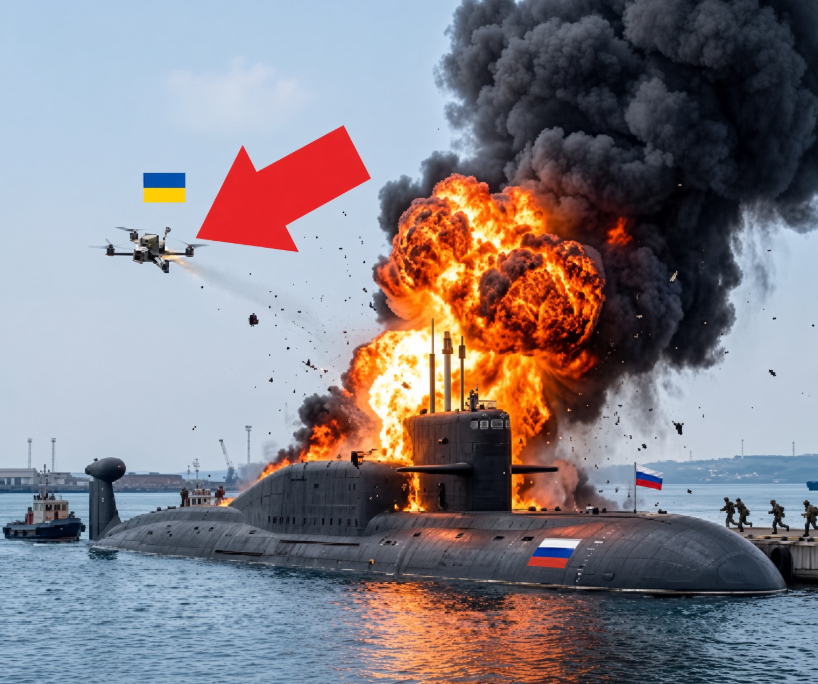
The target was not the $300 million Improved Kilo itself but the floating dock holding it. The submarine sat about seven meters out of the water, hatches open and propeller shaft removed—immobile and unready to dive. The drones hit the dock’s port-side ballast tanks. At 1:13 a.m. the pontoon settled to 14 meters with the boat still inside.
Cheap unmanned craft, totaling roughly $3 million, had taken out both a Kalibr launcher and the only breakwater in the port able to lift a Kilo. Patrol boats, nets, and a Pantsir that had to stay silent failed to close the gap created by their own alarm routine. A sailor glimpsed Walrus’s wake; Otter then punched through a compartment of the dock. The largest usable lift in the harbor went down with the submarine.
The account is presented as a tactical reconstruction, not a confirmed after-action report: timings, craft names (Seal, Otter, Walrus, Dolphin, Orca), and dialogue are dramatized. The operational idea it illustrates is simple—time the door the defender opens for himself, then strike the infrastructure that makes the high-value hull recoverable.