Ukraine Targets Russia’s S-400 Network in Expanding Deep-Strike Campaign
Ukraine is reportedly intensifying its campaign against Russia’s air-defense network, targeting valuable systems designed to protect military installations, strategic industries, and critical infrastructure deep inside Russian territory. The reported strikes highlight Kyiv’s efforts to weaken not only individual weapons systems but also the radar and electronic infrastructure supporting them.
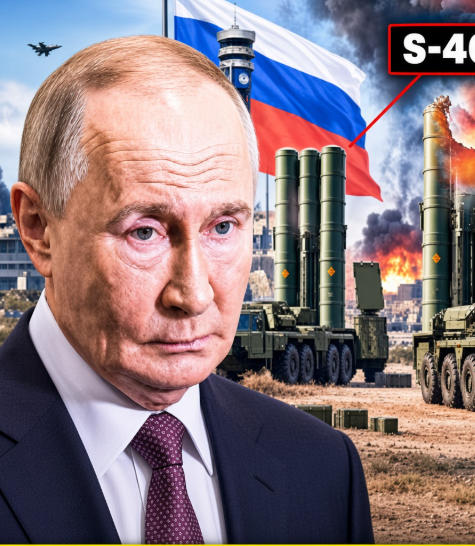
In Russia’s Bryansk region, Ukrainian forces reportedly struck two S-400 launchers, while a separate operation targeted a 92N6 radar associated with the advanced air-defense system. The S-400 is designed to detect and engage various aerial threats, including aircraft, drones, and missiles. Damage to its launchers or radar components could reduce local defensive capabilities, although the extent and duration of any disruption require independent verification.
Ukraine’s Unmanned Systems Forces reportedly claimed that 300 Russian air-defense assets were effectively neutralized over 261 days. The reported total included 162 air-defense systems, 124 radars, and 14 electronic-warfare systems. These figures represent Ukrainian military claims and should not automatically be interpreted as independently confirmed permanent destructions.
The campaign has also reportedly targeted Atlant Aero in Taganrog, a facility associated with the production and testing of Russia’s Molniya-series drones. Another strike reportedly involved Neptune cruise missiles. Additional reported targets included a Pantsir air-defense system, a P-18 radar, and other drone-production infrastructure.
These operations reflect the importance of Russia’s wider air-defense architecture. Launchers depend on radar, communications, and supporting systems to identify and respond to incoming threats. Disrupting those components could complicate Russia’s efforts to protect Moscow, military-industrial facilities, oil infrastructure, and other strategic sites.
However, Russia retains the ability to relocate systems, repair equipment, and adapt its defenses. The lasting impact will depend on confirmed losses, replacement capacity, and the effectiveness of subsequent operations.
Ultimately, Ukraine’s deep-strike campaign is testing Russia’s ability to defend a vast territory against increasingly long-range attacks. Independent verification remains essential when assessing the scale of damage and its consequences for the wider war.