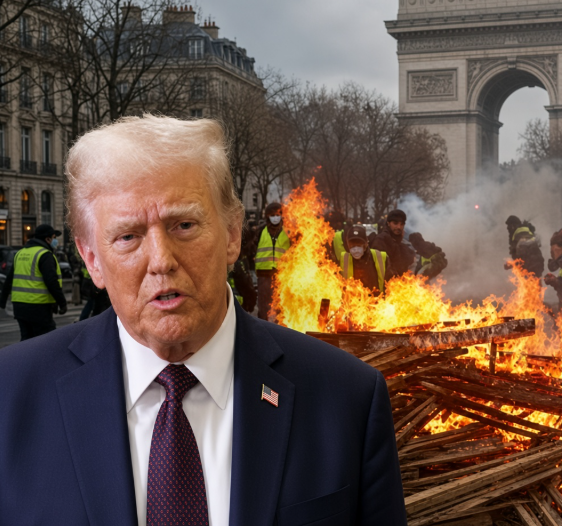
France’s growing student protests have triggered a political controversy after U.S. President Donald Trump attributed the unrest to what he described as “out-of-control mass migration” and claimed the demonstrations were connected to Islam. Trump did not provide evidence supporting those claims, while French authorities and reporting have emphasized education-related grievances as the main reason students took to the streets.
The protests began in response to problems within France’s education system, including teacher shortages, overcrowded classrooms, heavy workloads and deteriorating school facilities. Since late September, students have reportedly blocked entrances to hundreds of high schools, with demonstrations spreading across several parts of the country.
While many protests have remained focused on education, some demonstrations have escalated into confrontations with police, property damage and other disruptions. The unrest has increased political pressure on the French government as officials attempt to address students’ demands while maintaining public order.
Trump’s comments have added an international dimension to the controversy. By linking the demonstrations to migration and Islam, he presented the unrest as part of a broader European debate over immigration, integration and national security. However, the available description of the protests indicates that education policy was a central trigger.
The dispute highlights the contrast between Trump’s interpretation of the unrest and the issues emphasized by protesters and French authorities. As demonstrations continue, questions remain about whether the movement will remain primarily focused on education or develop into a broader political challenge involving France’s social and immigration policies.