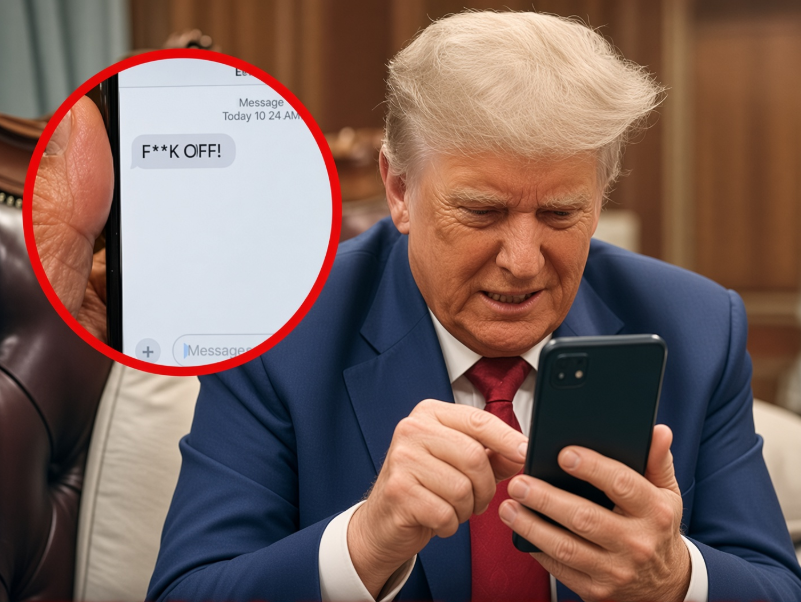
President Donald Trump is facing renewed attention over a reported private text exchange in which he allegedly used profanity while responding to a political dispute. The episode has generated headlines and social-media discussion, with the language itself becoming a major focus of public attention.
Reports about the exchange have raised questions about the circumstances surrounding the message, who received it, and what prompted Trump’s response. However, dramatic descriptions of the incident should be distinguished from the underlying facts, particularly when excerpts from private communications are circulated without their full context.
Trump has frequently used blunt and confrontational language when responding to political opponents, critics and unfavorable media coverage. His public communications often generate significant attention, and private messages attributed to political figures can similarly become controversial when they are made public.
The reported text comes amid continuing political disputes surrounding the Trump administration and its opponents. Supporters may view the language as part of Trump’s direct communication style, while critics have focused on the tone and circumstances of the message.
The controversy also highlights the broader issue of how private communications involving public officials become political stories once they are released. A single message can attract substantial attention, particularly when it contains profanity or appears to contradict a public statement.
At this stage, the significance of the reported exchange depends largely on the authenticity of the message, its complete context, and the circumstances under which it became public. The profanity has driven much of the headline coverage, but understanding the broader dispute requires examining what preceded the message and how the recipients responded.