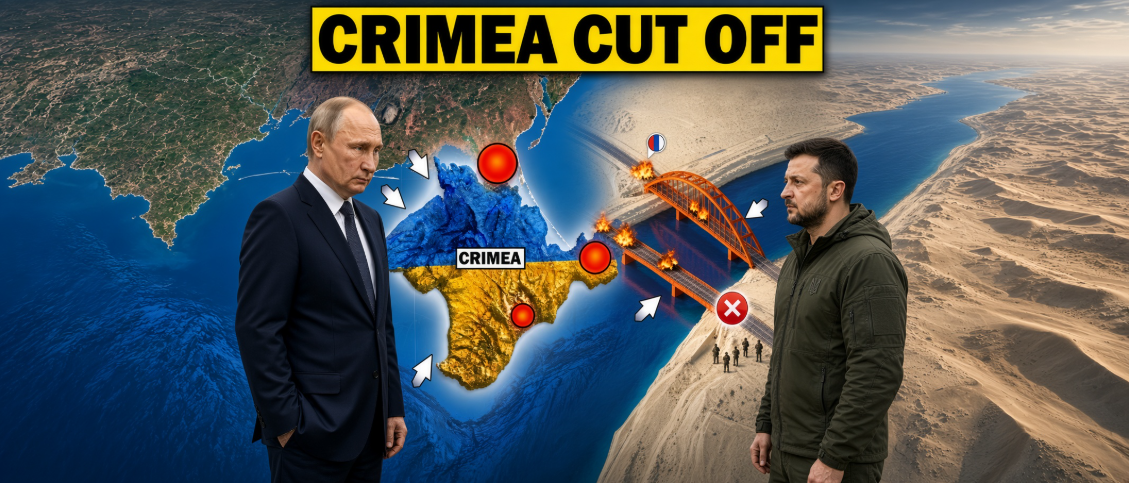
Ukraine’s reported attacks on bridges and transport infrastructure in southern Ukraine are highlighting the vulnerability of Russian military supply routes to occupied Crimea. The account alleges that precision strikes against the Azovske and Ichki bridges disrupted key connections and left more than 20,000 Russian troops exposed to logistical difficulties. The reported troop count, extent of bridge damage, and claim that these forces have been trapped require independent verification.
The strategy described relies on repeated attacks against infrastructure and follow-up strikes intended to complicate repair efforts. If transport links are damaged faster than they can be restored, Russian commanders may face delays moving ammunition, fuel, reinforcements, and equipment. However, the destruction of individual bridges does not automatically sever every supply route, as alternative roads, railways, ferries, and other transport options may remain available.
The report also highlights Ukraine’s use of uncrewed naval vessels, including Magura V5 and Sea Baby platforms, which have challenged Russian naval operations in the Black Sea. Such systems can threaten ships and port infrastructure without requiring a conventional naval fleet. Claims that AI-guided drones have neutralized all military ferries or rendered the Black Sea Fleet inoperable remain unsubstantiated.
The Kerch Bridge remains a strategically important connection between mainland Russia and Crimea, while Russian air defenses are intended to protect key military and infrastructure targets. Their effectiveness depends on detection, interception capacity, and the scale and timing of incoming attacks.
Overall, the reported campaign illustrates how bridge strikes, naval drones, and pressure on rail networks can increase the cost of sustaining Russian forces in Crimea. Whether these operations have produced a wider logistical collapse will depend on verified damage, remaining transport capacity, and Russia’s ability to repair or reroute supplies.