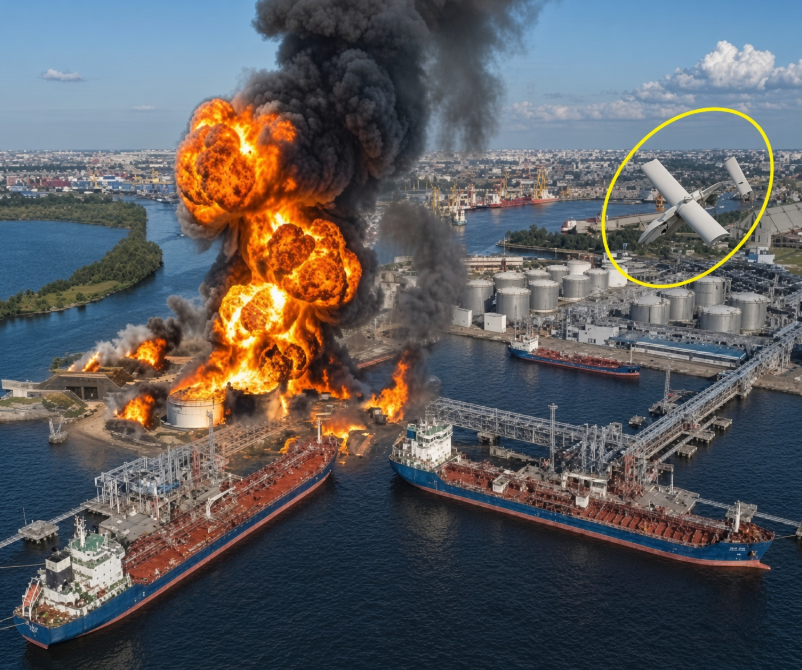
Ukraine’s Reported Drone Attack Targets Russia’s Baltic Oil Infrastructure
Ukraine reportedly launched a long-range drone operation targeting a major Russian oil terminal near St. Petersburg on the Baltic Sea, an area of strategic importance because of its role in energy exports and its proximity to NATO territory. The account describes a nighttime mission involving 18 FP-1 attack drones intended to damage critical oil infrastructure and disrupt revenue that helps finance Russia’s war effort.
According to the narrative, Russian forces deployed multiple layers of air defense along the drones’ suspected flight path. These reportedly included mobile machine-gun teams, S-350 systems, Su-35S fighter aircraft, Pantsir-S1 and Tor-M2 batteries, and electronic warfare equipment. Such a combination illustrates the challenges attackers face when attempting to penetrate a defended target, while defenders must detect and engage threats approaching from different directions and at low altitude.
The story portrays the operation as a sequence of interceptions and technical failures, with only one damaged drone allegedly reaching the terminal’s vicinity. Its fuel system, navigation, and engine were reportedly compromised during the flight. However, the precise number of drones launched, intercepted, or reaching their targets—and whether the terminal sustained damage—cannot be established from the supplied account alone.
The broader strategic issue is the vulnerability of Russia’s energy-export infrastructure to relatively inexpensive unmanned aircraft. Even unsuccessful attacks can force authorities to increase security, deploy additional air-defense assets, and temporarily adjust operations. Successful strikes could also interrupt shipments and create repair costs, depending on the extent of the damage.
Ultimately, the operation’s significance depends on independently verified evidence of the target, the damage sustained, and any resulting disruption to oil exports. The account highlights the continuing contest between long-range drone tactics and Russia’s layered defenses around strategically important energy facilities.