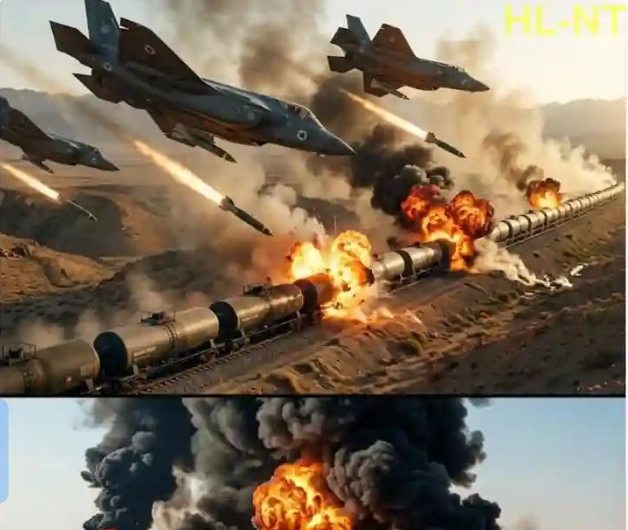
Claimed Israeli airstrike targeting what is presented as a large Iranian oil convoy transporting 75,000 tons of crude oil. According to the account, Israeli F-35 stealth aircraft carried out a precision attack on a moving “oil train” in a strategic corridor, resulting in a massive fire that destroyed the cargo and caused extensive environmental and economic damage. The strike is portrayed as a highly coordinated military operation using advanced munitions to ignite the tankers and ensure total destruction of the target.
The narrative frames the attack as part of a broader campaign aimed at undermining Iran’s ability to finance military activities through oil exports. It alleges that prior strikes have already degraded Iranian nuclear facilities, missile bases, and coastal defenses, leaving the country increasingly weakened. This latest operation is described as further accelerating Iran’s economic decline and limiting its capacity to sustain military operations.
The passage also claims that Iran is facing mounting pressure, including ongoing losses in a prolonged conflict that began in early 2026. It suggests that despite retaliatory missile attacks and reliance on allied proxy groups, Iran’s strategic position is deteriorating. The Iranian government is depicted as struggling to maintain control amid repeated military setbacks and infrastructure damage.
Israel is portrayed as maintaining air superiority and acting decisively to prevent Iran from funding attacks against Israeli civilians. The United States is also described as providing full diplomatic and military support for Israel’s actions. The overall tone of the passage emphasizes escalation, continued conflict, and the weakening of Iran’s capabilities.
Finally, the text frames the situation as an ongoing and rapidly developing conflict, with continued Israeli military pressure and further strikes expected as part of a broader campaign to neutralize perceived threats from Iran.