Donald Trump emerged in response to minor changes in his public schedule, and how that speculation rapidly evolved into a broader discussion about misinformation, media behavior, and digital communication dynamics.
It begins by describing how rumors started circulating on social media platforms suggesting that Donald Trump had been hospitalized at Walter Reed National Military Medical Center. These claims spread quickly across platforms such as X (formerly Twitter), Facebook, and various online forums, despite lacking official confirmation. The passage emphasizes that the speed of dissemination allowed unverified information to gain traction before credible sources could respond. As engagement increased, the narrative became increasingly distorted, with some users presenting speculation as fact, contributing to confusion and concern among audiences.
A central trigger identified in the text is a change in Trump’s public schedule, specifically the cancellation or absence from certain planned events. Because Trump is known for maintaining a highly visible and active public presence, deviations from his routine schedule tend to attract attention. The passage explains that in the absence of immediate clarification, observers began to speculate about potential reasons, which created a vacuum filled by assumptions and unverified interpretations. This gap between information and confirmation is presented as a key driver of the rumor cycle.
The role of social media platforms is analyzed in detail, particularly how algorithmic systems amplify content that generates strong engagement. The passage argues that emotionally charged posts—especially those involving health concerns about a prominent public figure—are more likely to be shared and redistributed rapidly, regardless of their accuracy. This amplification effect allowed the hospitalization rumor to spread widely in a short period of time, reaching audiences far beyond its original source. The text situates this incident within a broader pattern of similar events in which misinformation has circulated before being corrected by official statements.
As speculation intensified, official representatives intervened to clarify the situation. According to these statements, the claims that Donald Trump had been admitted to Walter Reed were false. They confirmed that he remained at his residence and continued his normal activities without interruption, and that there was no medical emergency. The passage highlights that this response was intended to counteract misinformation and restore clarity, demonstrating the importance of timely communication from authoritative sources in preventing further escalation of rumors.
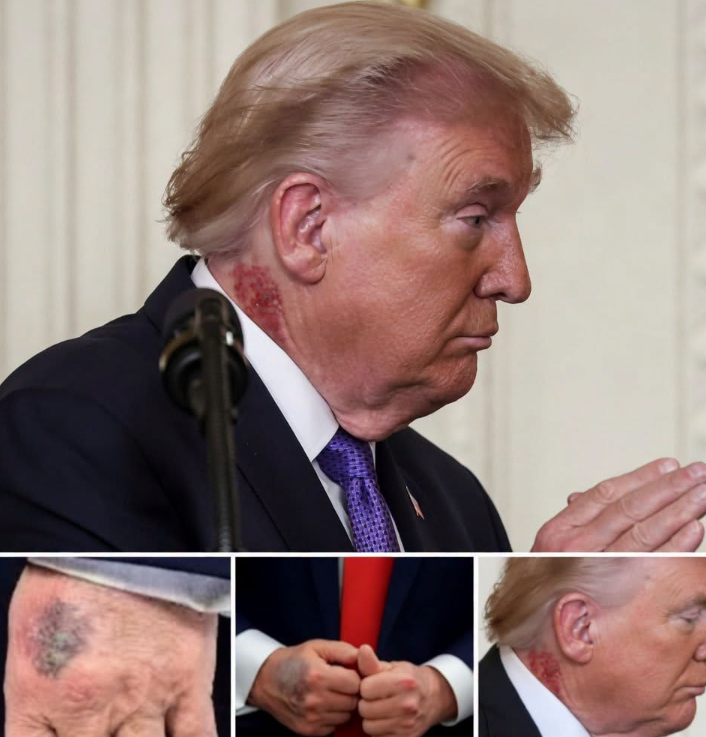
The article also contextualizes public interest in Trump’s health by referencing previous disclosures, including a diagnosis of chronic venous insufficiency. This condition affects blood circulation in the legs and is generally considered manageable, particularly among older adults. The passage stresses that there have been no recent updates suggesting any significant change in his health, and it clarifies that this condition was not linked to the rumors currently circulating online.
A significant portion of the text is dedicated to analyzing public reaction. It notes that responses varied widely, with some individuals expressing concern and others rejecting the claims as unverified speculation. The diversity of reactions illustrates how incomplete or ambiguous information can lead different audiences to construct different interpretations. Fact-checking organizations and established news outlets are described as playing an important role in verifying claims and providing accurate reporting during the unfolding situation. Their involvement helped slow the spread of misinformation and reintroduce verified facts into the public discourse.
The passage then broadens its focus to discuss the importance of verified information in the digital age. It argues that the ease of sharing content online has increased the risk of misinformation spreading quickly, particularly when it involves high-profile individuals or emotionally sensitive topics such as health. In such environments, distinguishing between credible and unreliable sources becomes essential. The text emphasizes that relying on official statements and reputable journalism is critical to maintaining an informed public.
Another key theme is why schedule changes involving public figures tend to generate disproportionate attention. The passage explains that highly visible individuals like Donald Trump operate under structured and predictable schedules, so any deviation is often interpreted as meaningful. This tendency reflects a broader relationship between visibility and scrutiny: the more prominent a figure is, the more likely even minor changes in their routine are to be analyzed and speculated upon.
The broader implications for digital misinformation are also explored. The passage highlights how modern technology enables rapid dissemination of both accurate and inaccurate information, making correction efforts more challenging. Once misinformation spreads widely, it can be difficult to fully retract or correct, even after official clarification is issued. This dynamic underscores the importance of media literacy, including the ability to evaluate sources critically and understand how information flows through digital networks.
Traditional media’s role is also addressed. The passage notes that responsible journalism requires careful verification before reporting on sensitive claims. Many established outlets reportedly waited for official confirmation before covering the rumors, which is presented as an example of cautious and ethical reporting. This restraint is framed as important for preserving public trust and ensuring accuracy in high-stakes reporting environments.
In its concluding section, the passage summarizes key lessons from the incident. It emphasizes that information spreads rapidly online, that verification is essential, and that public figures are subject to intense scrutiny where even minor events can generate widespread speculation. It also underscores the importance of clear communication from official sources in addressing rumors quickly and effectively.
Ultimately, the passage concludes that there is no verified evidence supporting claims that Donald Trump was hospitalized. Instead, official statements confirm that he continues his regular activities without interruption. The episode is presented as an example of how quickly speculation can escalate in digital environments and how important it is to rely on verified information. It reinforces the idea that navigating modern information ecosystems requires caution, critical thinking, and attention to credible sources in order to maintain an accurate understanding of public events.