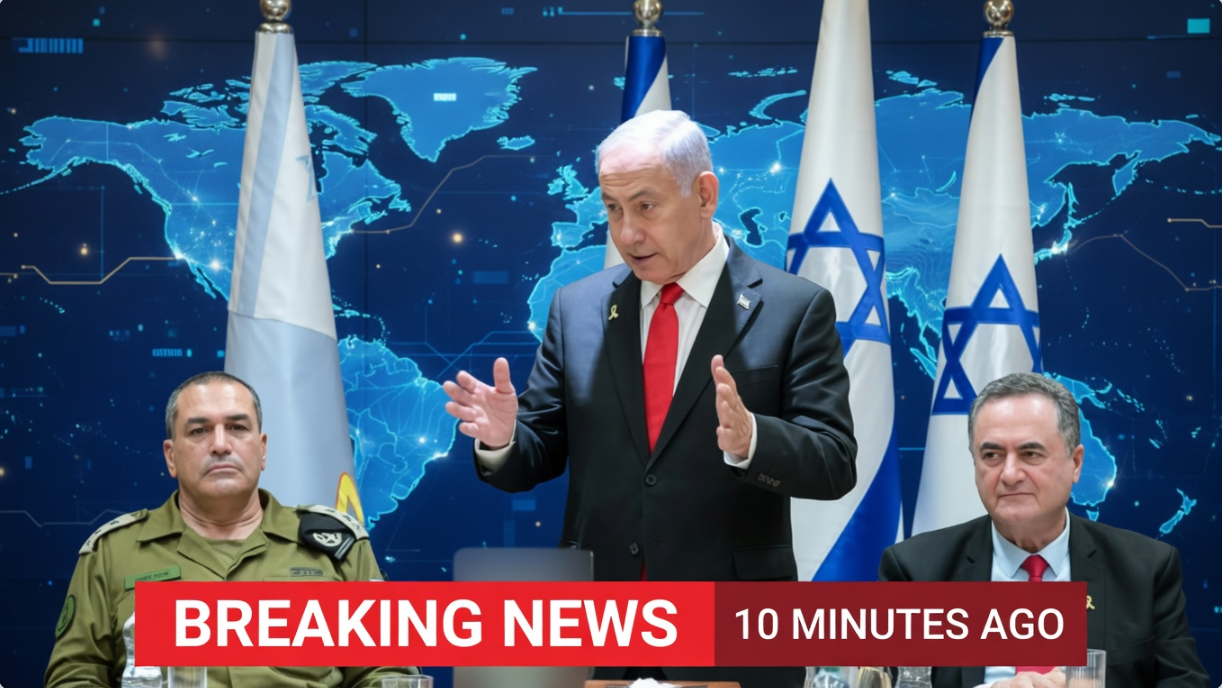
According to reporting cited from i24NEWS, members of the Israeli government expressed strong dissatisfaction following the announcement of a ceasefire agreement involving Lebanon. The ceasefire was publicly announced on Truth Social by Donald Trump, who stated that Israel had already given its consent to the agreement prior to formal approval by the Israeli Security Cabinet.
The report claims that several Israeli ministers were “outraged” by the sequence of events, particularly the perception that the agreement was publicly declared before Israel’s internal decision-making process had been fully completed. This has raised concerns within parts of the Israeli government about procedural authority and the handling of sensitive diplomatic decisions.
At the center of the controversy is the question of whether the ceasefire was properly approved through Israel’s official security and political channels. According to the report, the Israeli Security Cabinet had not yet formally voted on or ratified the agreement at the time of the public announcement, leading to frustration among some officials who felt the process had been circumvented or prematurely revealed.
The situation highlights tensions between diplomatic negotiations conducted at the international level and domestic approval mechanisms required within Israel’s governmental system. It also underscores the sensitivity surrounding ceasefire agreements, which often involve coordination between multiple governments, military leadership, and international mediators.
The announcement itself reflects ongoing efforts to de-escalate regional conflict involving Israel and Lebanon, but the reported internal backlash suggests disagreement over how and when such agreements should be finalized and communicated publicly. While ceasefire arrangements are typically intended to reduce hostilities and stabilize the region, the political reaction indicates that procedural disputes can complicate even agreements aimed at ending violence.
Overall, the report portrays a situation in which diplomatic progress toward a ceasefire was overshadowed by domestic political controversy, raising questions about process, authority, and communication in high-stakes international negotiations.