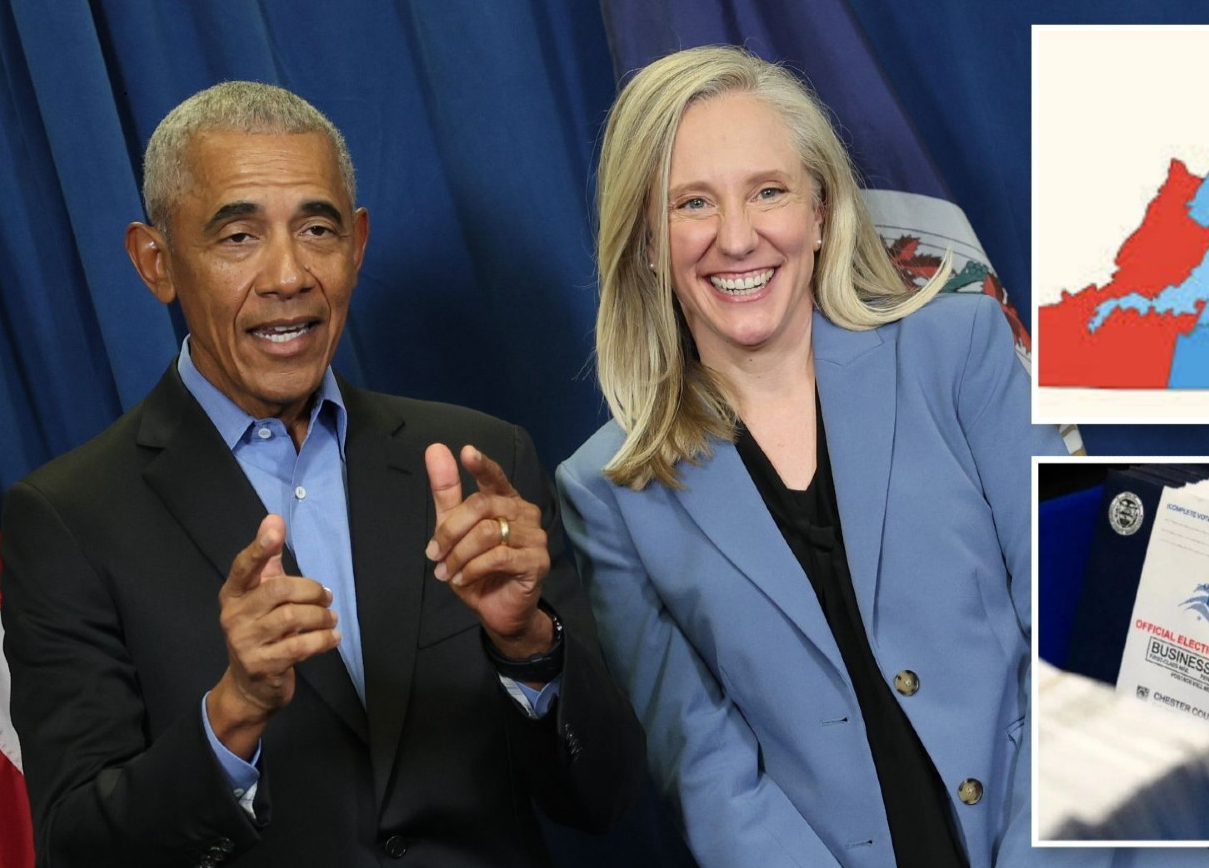
Ongoing legal battle before the Supreme Court of Virginia over a recently approved redistricting referendum that would significantly reshape the state’s congressional map. According to the article, the court denied a request for an emergency stay of a lower-court ruling from Tazewell County that blocked the Virginia State Board of Elections from certifying the referendum results. The denial concerned only the stay request, not the final merits of the appeal.
The referendum, which reportedly passed narrowly by a margin of 51 percent to 48.3 percent, would replace the current congressional delegation balance of six Republicans and five Democrats with a projected ten Democrats and one Republican. Because of that dramatic shift, the case has drawn national attention as part of the broader fight over congressional redistricting ahead of future elections.
Republican challengers argue that the Democrat-controlled Virginia General Assembly violated procedural and constitutional rules when it placed the amendment before voters. Their central claim is that lawmakers improperly used the constitutional amendment process to allow mid-decade redistricting. If the court agrees, the amendment could be invalidated and the statewide vote rendered void.
Attorney Thomas McCarthy argued before the court that a narrow partisan majority should not be able to bypass constitutional safeguards and reshape the electoral system in a way that lets representatives effectively choose their voters. He urged the justices to uphold the lower-court decision and permanently block certification.
Lawyers representing Democratic legislative leaders defended the referendum, arguing that lawmakers and voters followed every step required by the Virginia Constitution. Attorney Matthew Seligman said the amendment had been validly ratified through legislative approval and a statewide vote. He contended that challengers were attempting to undo a democratic outcome after voters had already spoken.
Seligman also argued that the challengers were reading restrictions into the constitution that do not exist. He maintained that the legislature has authority over its own procedures and that nothing barred the General Assembly from acting during the special session in which the measure was advanced.
The case reflects a larger national conflict in which both major parties seek redistricting advantages before elections that could determine control of the United States House of Representatives.
The article also notes that former Virginia Attorney General Ken Cuccinelli predicted the state Supreme Court would ultimately strike down the new map, possibly unanimously. The final ruling could significantly affect Virginia’s political landscape and influence redistricting disputes elsewhere.