Eastern Europe is undergoing a major transformation of its transport infrastructure, with Rail Baltica becoming an important link between the Baltic states and the wider European rail network. Estonia, Latvia and Lithuania are developing the project using the European standard gauge of 1435 mm, alongside modern signaling and infrastructure designed to improve both civilian transport and military mobility. The existing Baltic rail network still contains extensive 1520 mm broad-gauge infrastructure, so the transition does not simply eliminate the older system overnight.
Rail Baltica is designed to connect the Baltic states with Poland and the rest of the European network, creating a north-south transportation route of roughly 870 kilometers within the Baltic states. Its dual-use design can support the movement of troops, heavy equipment and supplies, making it relevant to NATO’s military-mobility planning. The infrastructure is being built to accommodate heavy loads and long freight trains, including requirements relevant to military equipment.
The wider Baltic-Black Sea-Aegean corridor adds another dimension to this network, linking northern and southern parts of NATO’s eastern flank through rail and road infrastructure. Via Carpatia is part of this broader effort to improve north-south connectivity and create additional options for moving personnel and equipment.
For military logistics, rail can offer a major advantage when large quantities of heavy equipment must travel long distances. Rail Baltica’s standard gauge is intended to reduce the need for time-consuming gauge changes when equipment moves between Poland and the Baltic states. A more integrated network can therefore reduce logistical bottlenecks and provide additional transportation capacity during a crisis.
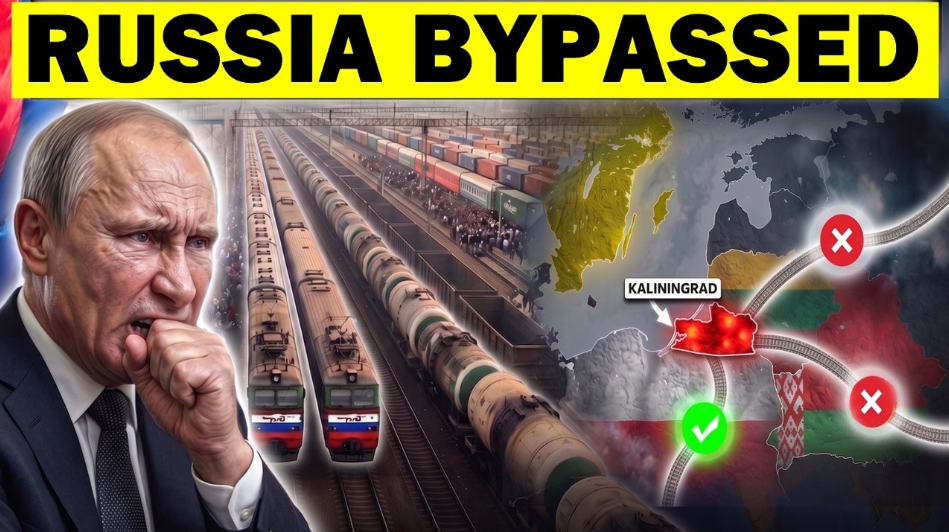
The consequences for Kaliningrad, however, require more nuance. The development of these corridors strengthens Western connectivity with the Baltic states, but it does not by itself create a complete blockade or make Kaliningrad’s existing supply routes useless. The project is better understood as an effort to diversify and strengthen European transport and military-mobility options while reducing dependence on legacy infrastructure.
Ultimately, Rail Baltica represents a strategic infrastructure shift: modernizing the Baltic transport system, connecting it more directly with Western Europe, and creating additional capacity for both civilian commerce and NATO mobility.