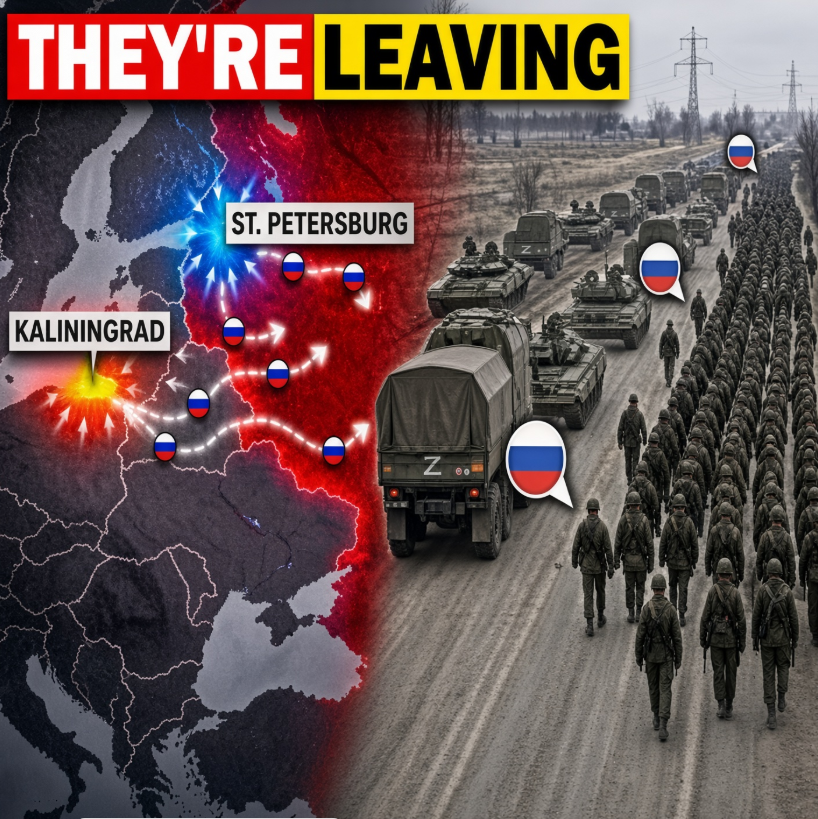
Russia’s Kaliningrad exclave is facing growing military, economic and geopolitical challenges as Moscow continues its war in Ukraine. According to the report, Vladimir Putin’s decision to redeploy significant forces from the region to the Ukrainian front has weakened Kaliningrad’s defensive capabilities, including elements of the 11th Army Corps and S-400 air defense systems.
The analysis examines how NATO’s eastern flank is strengthening its security posture, with Poland investing billions of dollars in border fortifications, steel barriers and anti-tank defenses. These measures reflect growing concerns about regional security and Russia’s military activities near NATO territory.
Meanwhile, Lithuania’s restrictions on certain Russian transit routes have added pressure to Kaliningrad’s already complicated supply networks. The exclave’s geographic separation from mainland Russia makes it heavily dependent on transportation corridors through neighboring countries, leaving it vulnerable to logistical disruptions and political tensions.
The report also highlights concerns about economic instability, rising prices and population outflows, with claims that as many as 150,000 residents could leave the region. However, the scale of these developments and claims that Kaliningrad is entirely defenseless require independent verification.
As military resources shift toward Ukraine and NATO reinforces its eastern borders, Kaliningrad’s strategic position is becoming increasingly complicated, raising questions about its long-term security, economic stability and role in Russia’s confrontation with the West.