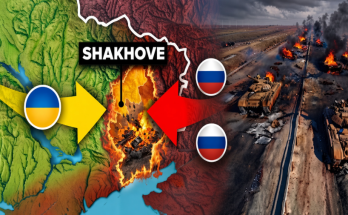
Ukrainian forces of the 3rd Army Corps have spent months quietly collapsing a Russian salient north of Lyman, then confirming the effort in mid-September as Operation Vivaldi. They pushed Russian units of the 20th and 25th Combined Arms Armies back from villages west of the Zherebets and toward the river itself, reclaiming on the order of 150–250 square kilometers.
The Zherebets was supposed to be a defensive barrier. It is a poor one. Bridges and fords are few; vehicles struggle to cross; drones and artillery can close those points faster than engineers can keep them open. Once Ukrainian assault groups reached the western bank at several axes—near Kolodyazi, Zarichne, and forested approaches farther north—the river stopped screening Russian logistics and instead boxed in units that had already been reporting inflated control.
A pocket around Kolodyazi formed as the salient was cut. Open-source estimates of trapped troops have ranged from a few hundred to far higher; Russian milbloggers later conceded that official maps had hidden the scale of the withdrawal. Many soldiers appear to have escaped east across the river; others remain isolated from supply and retreat routes.
The breakthrough matters less as a single encirclement than as a reversal of the northern pincer aimed at Sloviansk and Kramatorsk. Russia’s year-plus effort to turn Lyman into a launch pad has been delayed, while Ukraine has shortened its own line and restored room to reinforce south of the Siverskyi Donets. The front has not collapsed, but the initiative north of Lyman is no longer Russia’s.