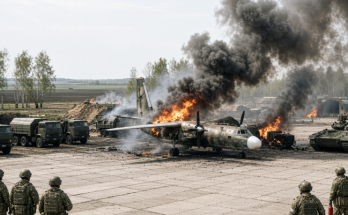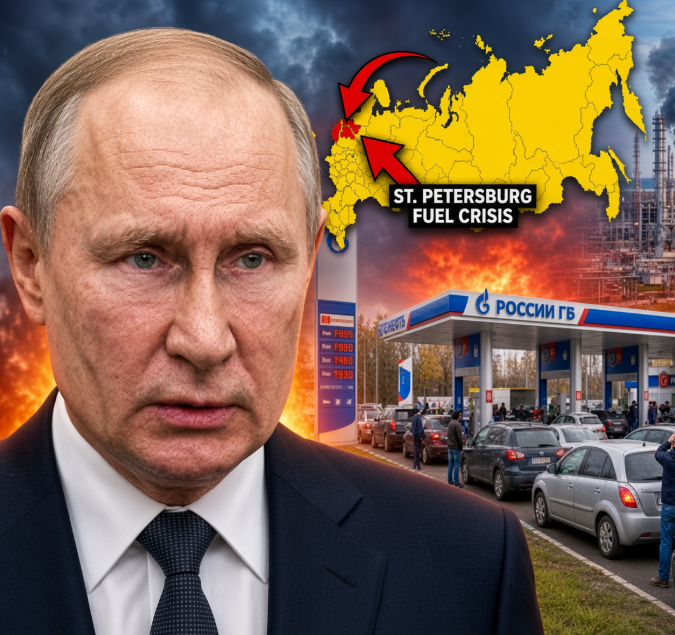
Ukrainian strikes on Russian oil refineries are reportedly contributing to a growing fuel shortage in St. Petersburg, with limited gasoline availability, long queues, higher prices, and rationing affecting civilians. The disruption highlights how repeated attacks on Russia’s energy infrastructure can create consequences far beyond the immediate targets.
According to the report, only 55 of St. Petersburg’s 175 petrol stations had fuel available at the time of the assessment. Some motorists reportedly faced queues lasting up to seven hours, while shortages were expected to continue into October. In affected areas, black-market gasoline prices were reportedly reaching 600–750 rubles per liter as consumers struggled to find regular supplies.
The analysis links the shortages to a broader wave of attacks on Russia’s refinery network. More than 20 refinery strikes were reportedly recorded in August, followed by additional attacks in September. The resulting production disruptions have reduced gasoline availability and affected trading volumes, while estimates cited in the report suggest that around 40% of Russia’s refining capacity has been affected.
The consequences are also spreading into transportation and consumer prices. Higher fuel costs increase expenses for trucking and other forms of freight, potentially raising the cost of transporting food and other essential goods. This adds further pressure to Russia’s already elevated inflation environment.
Authorities in the Leningrad region have reportedly introduced a 30-liter gasoline purchase limit per visit through October 1. The measure illustrates how refinery disruptions can translate into direct civilian impacts, while forcing Russian authorities to balance limited fuel supplies among transportation, commercial activity, and other domestic needs.