Ukraine’s Reported Counteroffensive Challenges Russia’s Donbas Campaign
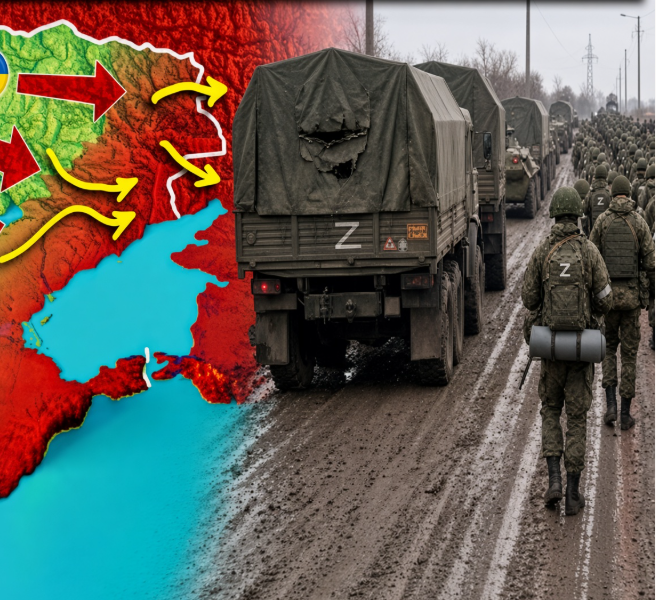
Ukraine’s 3rd Army Corps has reportedly launched a counteroffensive along parts of the eastern front, with claims that Ukrainian forces recaptured 10 settlements and disrupted Russian efforts to strengthen their positions in the Donbas. The Geo Network OSINT analysis examines how operational security, drone warfare, and pressure on Russian supply routes may have contributed to the reported developments. The number of settlements retaken and the scale of the territorial gains require independent verification.
A central focus is the area around the Zherebets River, where Ukrainian forces allegedly used coordinated attacks to place Russian units under pressure and complicate their withdrawal or resupply. The report highlights fiber-optic-controlled drones, which transmit control signals through physical cables rather than conventional radio links. This design makes them resistant to many forms of radio-frequency jamming, although they remain vulnerable to other countermeasures and practical limitations, including cable length and physical obstacles.
The analysis also emphasizes operational security, or OPSEC, which can help conceal troop movements and reduce an opponent’s ability to anticipate an attack. When combined with reconnaissance drones and coordinated ground operations, such measures can create tactical opportunities against forces that depend on predictable routes or exposed positions.
Another major theme concerns Russian military reporting. Some Russian military bloggers have alleged that commanders exaggerated battlefield successes, including claims related to Sviatohirsk. If accurate, misleading reports could distort senior leadership’s understanding of frontline conditions and weaken operational decision-making. However, allegations of fabricated victories and resulting command failures require corroboration from reliable sources.
The broader strategic question is whether localized Ukrainian advances can disrupt Russia’s wider campaign in the Donbas. Tactical gains may force Russian units to reposition, reinforce threatened sectors, or reassess their plans, but they do not automatically mean that an entire offensive has collapsed.
Ultimately, the reported operation illustrates how drone technology, information discipline, and battlefield coordination can influence local combat outcomes. Its wider significance depends on verified territorial changes, sustained Ukrainian control, and Russia’s subsequent response.