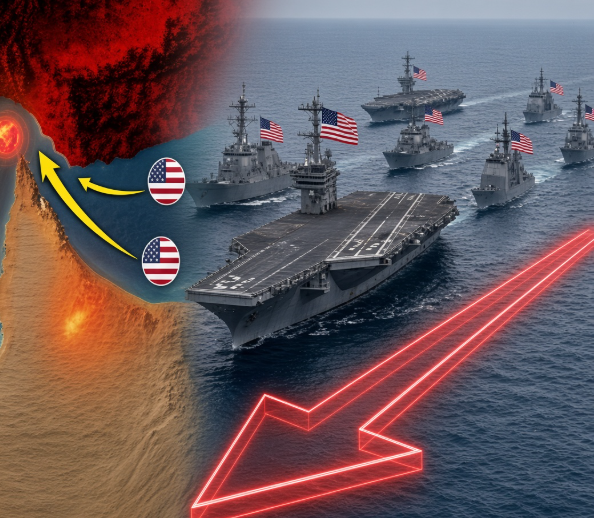
The reported collapse of a three-month ceasefire has triggered renewed tensions around the Strait of Hormuz, one of the world’s most strategically important maritime chokepoints. According to the scenario presented, Iranian attacks on commercial shipping prompted the United States to deploy more than 20 warships and aircraft carriers to the region, dramatically increasing the risk of a direct naval confrontation.
The analysis focuses on the challenge posed by Iran’s asymmetric maritime forces, including fast attack boats, drones, and small submarines. These systems can be difficult to counter because they rely on speed, numbers, concealment, and dispersed attacks rather than conventional naval formations. The U.S. response is described as combining electronic warfare, precision-guided weapons, and advanced defensive systems intended to disrupt or destroy incoming threats.
The report also describes U.S. strikes against Iranian coastal defenses. The extent of the reported damage and the number of systems destroyed would require independent confirmation. Similarly, claims that the American deployment has effectively “locked down” the Strait should be distinguished from a complete physical blockade, which would carry significant legal, military, and economic implications.
A major concern is the impact on global commerce. The Strait of Hormuz carries a substantial share of internationally traded oil and gas, meaning prolonged disruption could increase energy prices, shipping costs, and inflationary pressure. The report claims an 80 percent decline in shipping traffic and warns that oil could exceed $120 per barrel, but both figures should be treated as scenario estimates unless independently confirmed.
The broader crisis demonstrates how a regional confrontation could rapidly generate global economic consequences. Any sustained disruption would depend on the duration of hostilities, the availability of alternative shipping routes, international naval escorts, and the ability of both sides to prevent further escalation. The situation therefore represents not only a military confrontation but also a significant threat to energy and maritime security.