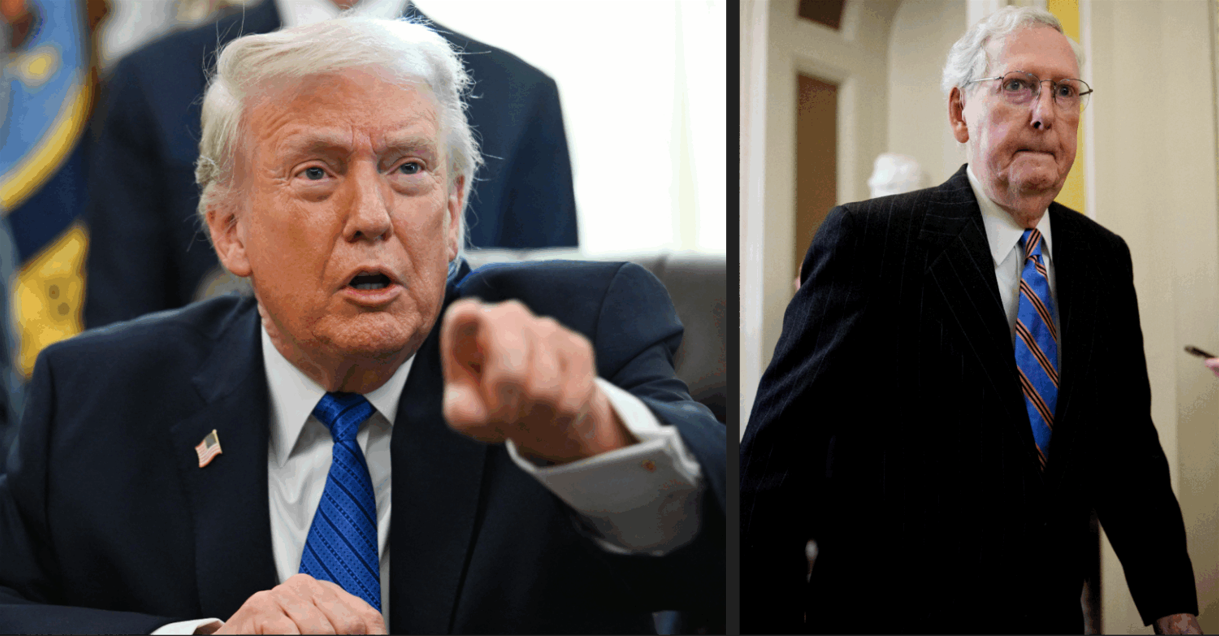
Sen. Mitch McConnell’s recent hospitalization is adding uncertainty to Senate operations and complicating Republican efforts to advance key legislation, including the stalled SAVE Act. McConnell, 83, was admitted to a Washington-area hospital after experiencing flu-like symptoms, according to his office, which said he is being evaluated as a precaution and remains in contact with staff.
Although his condition was described as stable with a positive prognosis, his temporary absence comes at a sensitive moment for Senate Republicans. McConnell recently stepped down as Senate GOP leader in 2024 and has announced he will not seek re-election in 2026, but he still plays an important institutional role as chair of the Senate Rules and Administration Committee. That position gives him influence over election-related legislation and procedural priorities.
One of the most affected measures is the Safeguard American Voter Eligibility (SAVE) Act, a Republican-backed bill focused on stricter citizenship verification requirements for federal voter registration. The proposal has been delayed in committee, and McConnell’s absence is expected to slow further progress. GOP lawmakers have expressed frustration over the lack of movement, arguing the bill is both popular and necessary.
Shortly after McConnell’s hospitalization was announced, Rep. Brandon Gill and dozens of House Republicans sent a letter urging him to advance the bill. They pushed for a committee markup and floor consideration ahead of the next election cycle, framing the issue as urgent and broadly supported by voters.
Supporters of the SAVE Act have pointed to polling to bolster their case, including surveys showing strong public backing for voter identification requirements. Analysts cited wide support across party lines, arguing that most Americans favor requiring proof of identity to vote, even though debate continues over how such rules affect access to the ballot.
A broader political backdrop is shaping the discussion. Republicans have made election integrity legislation a priority heading into the midterms, while Democrats have generally raised concerns that stricter rules could create barriers for eligible voters. That divide has contributed to repeated legislative stalemates in Congress.
McConnell’s absence, even if temporary, highlights how individual health issues can affect legislative momentum in a closely divided Senate. With key committees already managing a heavy agenda and leadership transitions still settling after his departure from GOP leadership, Republicans may face additional delays in advancing election-related bills.
For now, McConnell’s office has indicated he continues to work remotely while recovering, but no timeline has been given for his return to full Senate duties.