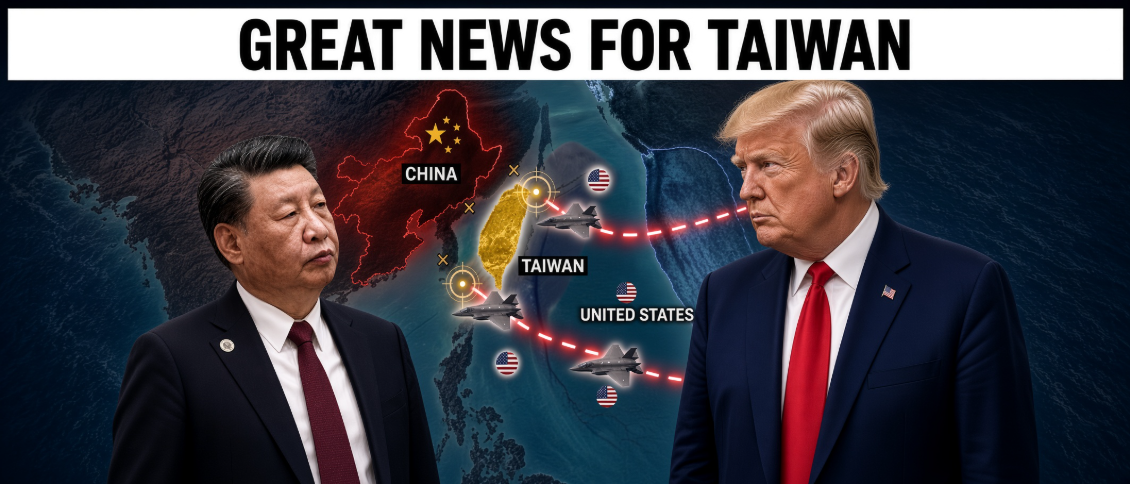
Taiwan and the United States are strengthening their deterrence strategy to make any potential Chinese amphibious invasion more difficult and costly. The approach combines advanced aircraft, precision missiles, unmanned systems, naval defenses, and distributed military operations designed to complicate Chinese planning across the Taiwan Strait.
A central element is Taiwan’s “Porcupine Doctrine,” which emphasizes asymmetric warfare rather than matching China’s military strength platform for platform. Systems such as HIMARS and ATACMS can provide long-range precision-strike capabilities, while mines and unmanned surface or underwater vehicles could threaten ships approaching Taiwan’s coastline. The proposed “Hellscape” concept envisions using large numbers of autonomous systems and other defensive weapons to disrupt an invasion force before it reaches shore.
Airpower is another important component. Taiwan’s F-16 fleet contributes to air defense and precision-strike missions, while cooperation with US forces and the use of Agile Combat Employment concepts can help American aircraft operate from dispersed locations and remain resilient during a conflict. However, the specific claim involving 66 F-16V Block 70 aircraft should be distinguished from broader modernization efforts and independently verified.
China’s potential reliance on civilian roll-on/roll-off ferries to supplement military transport also presents operational challenges. Such vessels could expand transport capacity, but they would remain vulnerable to attacks, maritime disruption, port damage, and logistical bottlenecks.
Ultimately, Taiwan’s defense strategy seeks to exploit geography, mobility, and relatively inexpensive asymmetric weapons to complicate a larger opponent’s plans. Its effectiveness would depend on coordination, available munitions, intelligence, logistics, and the ability of both sides to adapt during a rapidly changing conflict. The outcome of any confrontation remains uncertain.