Russia’s reported summer offensive is facing mounting resistance as Ukrainian defenses, drone operations, and attacks on supply routes complicate Moscow’s efforts to capture additional territory. According to the account, Russian forces conducted approximately 7,000 assaults while gaining only 14 square kilometers, with Ukraine’s defensive positions helping limit further advances. These figures, including the claim that Russia experienced its first net territorial loss since 2023, require independent verification and a clearly defined reporting period.
The report highlights Ukraine’s fortified defensive belt, described as the “Kale Kuşağı,” alongside the role of numerous Ukrainian brigades in containing Russian attacks. Drones are also presented as a major factor in disrupting Russian logistics, with alleged strikes reaching targets as far as 300 kilometers behind the front. If sustained, attacks on ammunition depots, fuel supplies, transport routes, and command facilities could reduce the ability of Russian units to maintain offensive operations.
A second challenge concerns Russia’s armored vehicle losses. The account argues that battlefield attrition and difficulties replacing modern equipment are forcing Russian forces to rely increasingly on older T-55 and T-62 tanks. Although these vehicles can still provide fire support, their age and capabilities may limit their effectiveness against modern anti-tank weapons and drone attacks.
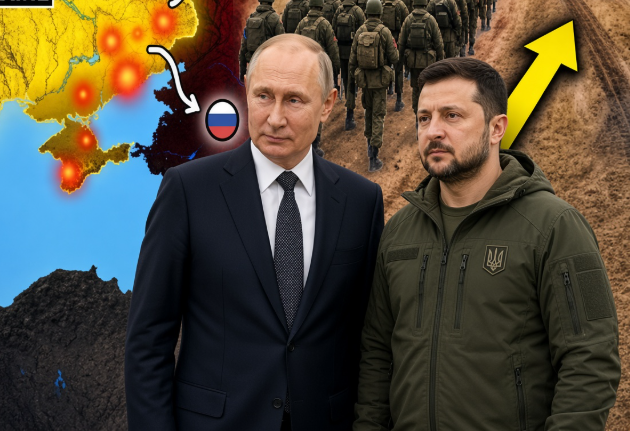
Finally, the report raises the possibility of a future Ukrainian armored breakthrough aimed at threatening Russia’s land corridor to Crimea. Such an operation would depend on available reserves, air defense, minefields, and the condition of Russian defensive lines. The claim that 700,000 Russian troops are stranded or that a breakthrough is imminent remains unverified.
Overall, the account portrays a war of attrition in which territorial gains, logistics, and industrial replacement capacity may matter as much as the number of assaults launched.