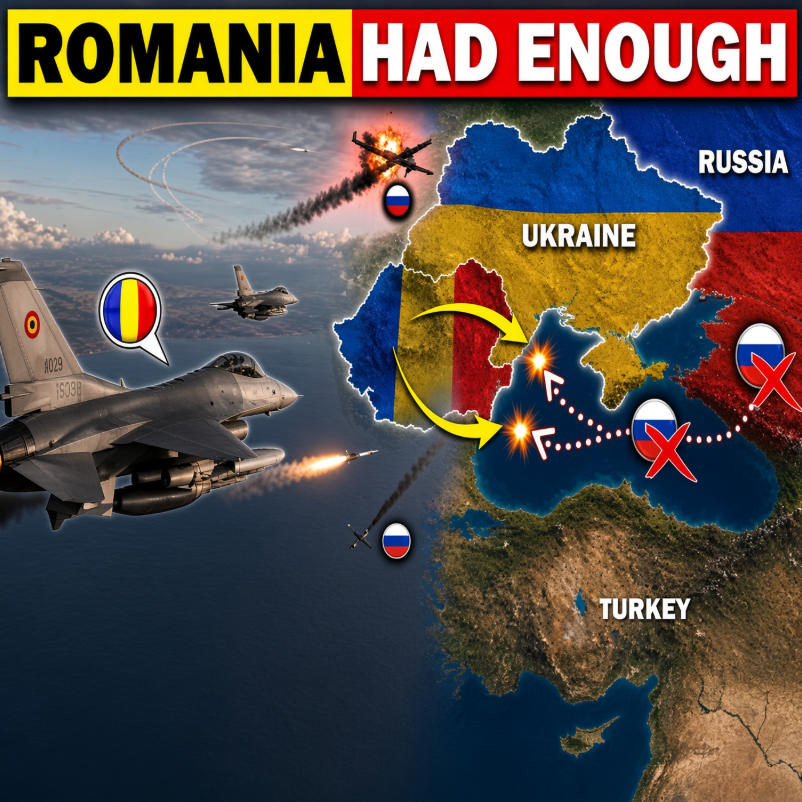
Romania’s reported use of F-16 fighter jets in response to Russian drone activity near its territory has renewed debate over how NATO countries should handle aerial threats linked to the war in Ukraine. The account claims that Romanian aircraft intercepted and destroyed three Russian kamikaze drones over a 72-hour period. However, the number of drones destroyed, the circumstances of the incidents, and whether all the aircraft entered NATO airspace require independent confirmation.
The report presents these alleged engagements as a turning point in NATO’s response to Russian drone incursions, describing a shift from monitoring and issuing warnings toward directly engaging aerial threats. Any claim that the alliance has formally adopted a universal “shoot to kill” policy would need confirmation from NATO or relevant national authorities. Responses to incursions can vary depending on the threat, location, rules of engagement, and risk to civilians.
Romania’s position is strategically important because it borders Ukraine and the Black Sea, where Russian attacks have repeatedly raised security concerns for neighboring countries. Protecting Romanian airspace also helps safeguard infrastructure and transport routes associated with regional trade, including Ukraine’s grain exports. Nevertheless, the claim that the alleged interceptions directly secured the grain corridor is not established by the account.
The incidents also highlight the economic imbalance between relatively inexpensive attack drones and the advanced aircraft or air-defense missiles used to counter them. While intercepting drones can prevent damage, the cost of defending against repeated attacks can place pressure on military budgets and ammunition supplies.
Overall, the reported incidents underscore the challenge NATO members face in defending their airspace without unnecessarily escalating the conflict. Confirming the details of each interception and any resulting policy changes is essential before concluding that NATO has fundamentally changed its rules of engagement.