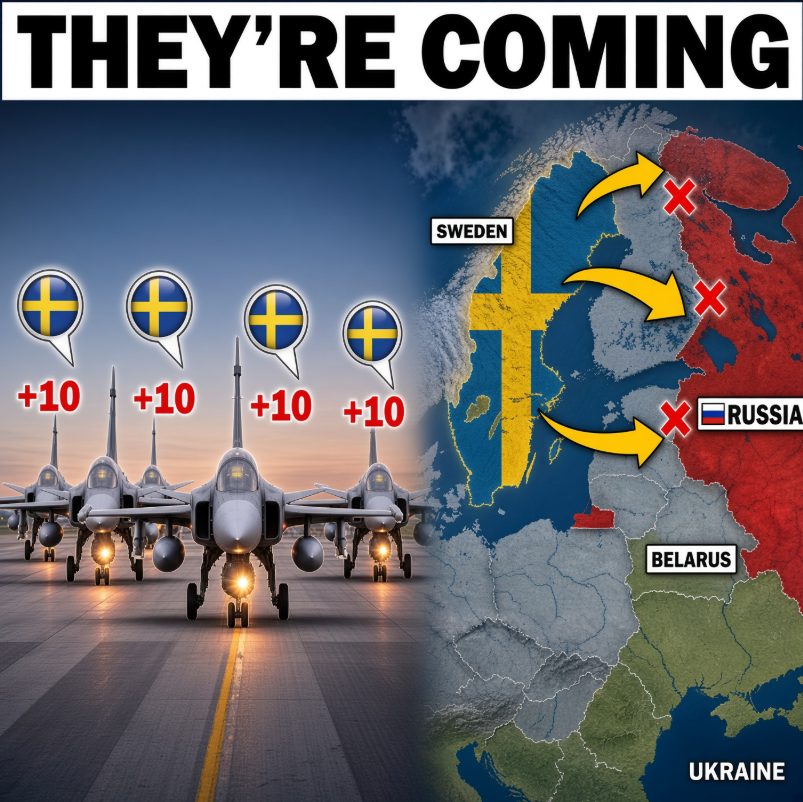
Sweden and Finland’s growing military cooperation is reshaping security planning across northern Europe, placing additional pressure on Russia’s strategic position in the Baltic Sea region. The account describes Sweden deploying JAS 39 Gripen fighter aircraft and a Visby-class corvette to support Finland, highlighting the increasing integration of Nordic forces following their countries’ decisions to join NATO. The specific deployment details and stated mission require independent confirmation.
With Finland and Sweden now members of NATO, the alliance has strengthened its geographic position around the Baltic Sea. However, describing the waterway as a fully controlled “NATO lake” overstates the situation: Russia retains access to the region, including through its Kaliningrad exclave, and maritime operations remain shaped by geography, air defenses, missiles, and naval capabilities.
The report also links Nordic defense cooperation to the security of the Suwałki Gap, the corridor between Poland and Lithuania that connects the Baltic states to the rest of NATO’s territory. Greater coordination among allied air, land, and naval forces could improve reinforcement planning and complicate Russian military operations, although it cannot eliminate the corridor’s geographic vulnerabilities.
Meanwhile, the account claims that Moscow is seeking to restore Soviet-era military facilities near its northwestern borders while continuing to sustain its war in Ukraine. Rebuilding bases could strengthen Russia’s long-term regional posture, but the scale, readiness, and timing of any renewed deployments need verification.
Sweden and Finland are also described as expanding military assistance to Ukraine. The report references the PURL initiative, a mechanism associated with procuring US-made weapons for Ukraine, although the precise contributions attributed to the Nordic countries require confirmation.
Overall, deeper Nordic integration strengthens NATO’s regional planning and collective defense. Russia’s remaining naval and missile capabilities, however, mean the Baltic Sea remains a contested strategic environment rather than an area under uncontested alliance control.