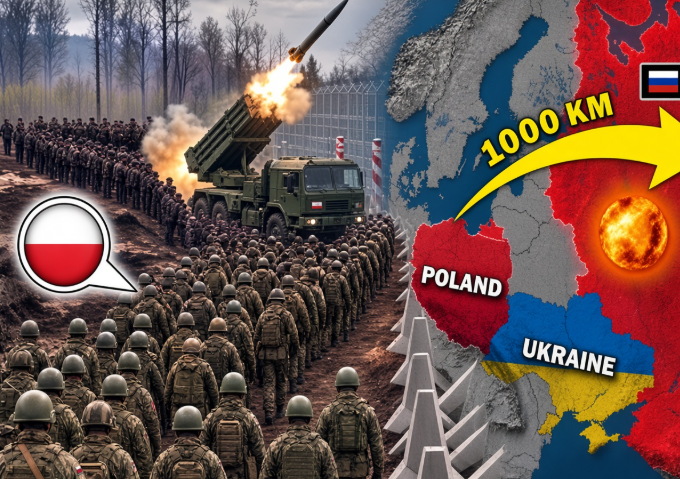
Poland is accelerating efforts to strengthen its eastern defenses as Russia’s war against Ukraine continues to shape European security planning. The country’s “Eastern Shield” initiative focuses on fortifications, surveillance, anti-drone measures, and other defensive infrastructure along its borders with Belarus and Russia’s Kaliningrad region. Although the project is intended to complicate potential incursions, describing it as an impenetrable barrier overstates what any defensive system can guarantee.
Poland is also expanding its armed forces and acquiring advanced equipment, including long-range JASSM-ER cruise missiles. These weapons can give Polish forces greater reach against distant military targets, potentially complicating Russian operational planning. Their presence does not, however, mean that an attack on Kaliningrad is planned or that the Russian exclave has become militarily irrelevant.
Warsaw’s troop expansion plans are part of a broader effort to increase readiness and strengthen NATO’s eastern flank. The reported figure of 500,000 personnel should be understood as a force-development claim that requires clarification, including whether it refers to active-duty troops, reserves, or a broader mobilization target.
Further north, Norway continues to invest in its Arctic defense capabilities, including F-35 fighter aircraft, maritime surveillance, and naval modernization. These measures reflect concerns about the strategic importance of the High North, where Russia maintains significant military infrastructure and strategic submarine forces.
Together, Poland’s fortification projects and Norway’s Arctic preparations illustrate NATO members’ growing emphasis on deterrence, military mobility, and protecting critical infrastructure. However, claims that Russia’s Kaliningrad position has been rendered useless or that NATO has adopted an entirely new “no-compromise” doctrine require more specific evidence. The long-term effect will depend on force readiness, coordination among allies, and how both sides manage the risk of escalation.