Ukraine’s Long-Range Strike Campaign Raises Questions About Russia’s Strategic Rear
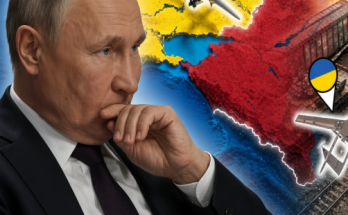
Ukraine’s reported expansion of long-range drone and precision-strike operations has intensified scrutiny of Russia’s ability to protect military and industrial infrastructure far from the front lines. The supplied analysis argues that attacks reaching more than 1,000 kilometers into Russian territory challenge the assumption that distance alone can provide security for important facilities.
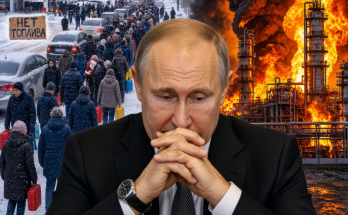
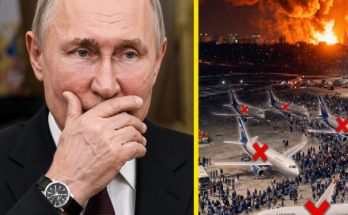
The report focuses on alleged strikes against command centers, fortified shelters, airbases, communications facilities, energy infrastructure, and logistical networks. If significant damage to these sites were independently confirmed, the consequences could include interruptions to military coordination, aircraft operations, fuel processing, and the movement of ammunition and equipment.
Another central theme is air-defense saturation. Coordinated drone waves can place pressure on defensive systems by forcing operators to detect, track, and respond to multiple threats across a wide area. However, the effectiveness of such attacks depends on factors including radar coverage, electronic warfare, interception capabilities, target selection, and the extent of any damage. The supplied account does not identify specific operations or provide independently verified results.
The analysis also highlights the role of domestic long-range weapons and intelligence coordination in Ukraine’s broader strategy. Sustained attacks on rail junctions, refining facilities, and supply networks could increase Russia’s defensive costs and complicate its military logistics, although the lasting impact depends on repair capacity and alternative routes.
Claims that Russia’s strategic rear has been permanently dismantled or that senior leaders have nowhere to hide go beyond the evidence provided. The broader issue is whether recurring strikes can produce lasting operational disruption and force changes in Russia’s defensive posture. Verified information about specific targets, damage, and recovery will be essential to assessing the campaign’s actual strategic significance.
At PPR Global, the focus is on examining the evidence behind major developments in military strategy and global security.