Reports of Putin’s Private Fears Highlight Russia’s Difficult Choices in Ukraine
A report attributed to The Economist claims that Vladimir Putin privately fears the consequences of ending the war in Ukraine without achieving his main objectives. The supplied account quotes him as allegedly saying, “They will hang me,” suggesting concern about the political consequences of an outcome that falls short of victory. The quotation and its context require verification, and the headline alone cannot establish Putin’s private thinking.
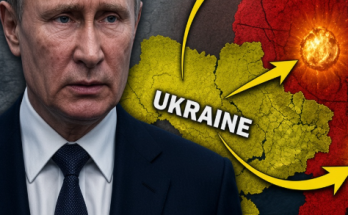
The analysis argues that capturing the entire Donbas region has become increasingly important to the Kremlin. Yet Russian forces continue to face Ukraine’s fortified defensive positions, where trenches, obstacles, surveillance systems, and extensive drone activity can complicate advances and expose troops and supply routes to attack. These battlefield conditions can increase the cost of offensive operations and limit the pace of territorial gains.
The account also describes a Ukrainian defensive grouping of approximately 40,000–60,000 personnel in northern Donbas, highlighting the roles of commanders Andriy Biletsky and Prokopenko. The stated troop strength and the precise composition of these forces would need independent confirmation. If accurate, such a concentration could be significant in a region central to Russia’s stated military objectives.
Estonian intelligence officials are also cited as warning that Putin faces increasingly difficult strategic choices. Continuing the war could impose further military and economic costs, while accepting a settlement that falls short of Russian objectives could create domestic political challenges. The actual consequences would depend on battlefield developments, elite support, and the terms of any potential agreement.
Overall, the supplied account portrays Russia as facing difficult options rather than demonstrating that the Kremlin is on the verge of collapse. Claims about Putin’s private fears, Ukraine’s troop numbers, and the likely direction of the war require careful scrutiny against reliable, independently verified evidence.