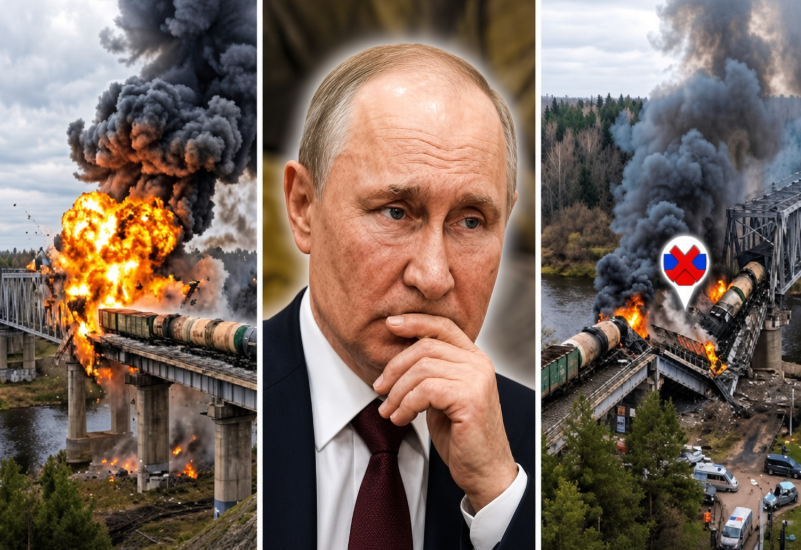
Reported Ukrainian Strike on Bryansk Railway Bridge Raises Questions About Russian Military Logistics
A reported Ukrainian strike on a railway bridge over the Unecha River in Russia’s Bryansk region has drawn attention to the vulnerability of transport infrastructure supporting Russian military operations. According to the supplied account, the bridge forms part of a railway route used to move ammunition, fuel, and heavy equipment toward areas of the front, including the Donetsk sector. The timing, extent of damage, and military impact of the alleged strike require independent verification.
Railways are essential to Russia’s ability to sustain large-scale operations because they can move heavy equipment and bulk supplies more efficiently than road transport. Damage to a key bridge could force trains to take alternative routes, delay deliveries, or require temporary transfers between transport systems. The actual disruption would depend on the bridge’s condition, the availability of alternate connections, and the speed of repairs.
The account also links the reported strike to broader Ukrainian efforts to pressure Russian logistics through attacks on transport infrastructure, drone operations, and counterattacks. It references Operation Vivaldi, which Ukrainian forces reportedly used to reclaim territory and target Russian personnel and equipment, including through ground robotic systems. The scale of territorial gains and reported losses should be assessed against independently verified battlefield information.
The description further cites assessments attributed to the Institute for the Study of War, arguing that Russia’s actual territorial gains may differ from figures announced by the Kremlin. Such comparisons depend on the dates, geographic definitions, and evidence used to calculate changes in control.
Overall, the reported bridge strike illustrates how attacks on logistics can create pressure beyond the immediate battlefield. However, claims that the route has been decisively severed or that Russia’s broader military position has fundamentally changed remain unconfirmed without reliable evidence of the damage and its lasting operational effects.