Serbia’s Political Direction Raises Questions About Putin’s Influence in Europe
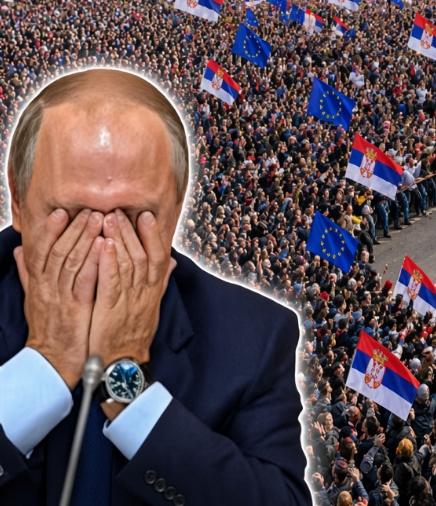
Serbia’s relationship with Russia is facing renewed attention amid claims of growing public celebrations and shifting political attitudes toward Moscow. The headline describes large-scale demonstrations as a sign that Putin’s influence in Europe may be weakening, although it does not identify the specific event, its location, or the number of people involved.
Serbia has historically maintained close political, economic, and cultural ties with Russia while also pursuing closer integration with the European Union. This balancing act has created tensions over issues including sanctions, energy cooperation, regional security, and Serbia’s broader foreign-policy direction.
Any significant shift in public opinion or government policy could have consequences for Moscow’s position in the Balkans. Russia has traditionally viewed Serbia as an important European partner, while Western governments have encouraged Belgrade to align more closely with European policies.
However, public celebrations or demonstrations do not automatically indicate a change in government policy or the collapse of a wider alliance. The scale of the reported gatherings, their political message, and their impact on Serbia’s relationship with Russia would need to be established through reliable reporting.
The broader question is whether Serbia’s domestic political developments will alter its long-standing effort to balance relations with Moscow and Western partners. Further details are needed to determine whether the reported events represent a lasting geopolitical shift.