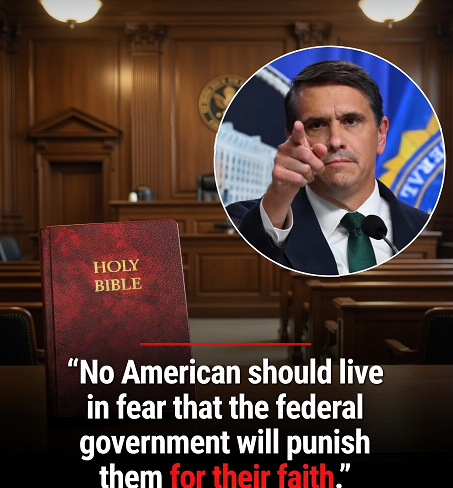
The statement attributed to Acting Attorney General Todd Blanche responds to a new Department of Justice (DOJ) task force report that alleges widespread anti-Christian bias within federal government actions during the Biden administration. According to the report described in the article, the DOJ task force examined prosecutions, agency policies, and internal federal practices and concluded that certain actions may have disproportionately affected Christians or reflected hostility toward Christian beliefs.
Blanche is quoted as strongly reaffirming the administration’s intent to address these findings. He stated that the DOJ would “continue to expose bad actors who targeted Christians” and would “work tirelessly to restore religious liberty for all Americans of faith.” His comments frame the issue as part of a broader effort to ensure equal treatment under federal law and to protect religious freedom as a constitutional right.
The report referenced in the article claims that various federal enforcement actions and policy decisions under the previous administration created an environment where Christians were allegedly treated unfairly. While the article does not provide full methodological details, it suggests the task force reviewed cases involving prosecutions and regulatory actions that advocates believe may have reflected bias against religious expression or practice, particularly in Christian contexts.
Supporters of the task force’s findings interpret them as evidence that religious liberty protections need stronger enforcement mechanisms. They argue that government institutions must remain neutral toward all faiths and that any perceived targeting of Christians undermines constitutional principles.
Critics of such reports typically argue that claims of systemic anti-Christian bias require careful scrutiny and that enforcement actions by federal agencies are generally based on legal standards rather than religious identity. However, the article focuses primarily on the administration’s response rather than presenting a full debate over the report’s methodology or conclusions.
Blanche’s remarks indicate that the DOJ intends to pursue further review of past actions and possibly implement policy changes aimed at preventing what it characterizes as religious discrimination. The framing suggests a broader political and legal initiative centered on religious liberty enforcement, accountability for prior government decisions, and increased oversight of federal agencies.
Overall, the report and accompanying statements highlight ongoing tensions in U.S. politics over the role of religion in public life, the interpretation of religious freedom protections, and how federal law enforcement agencies balance civil rights obligations with neutral application of the law. The DOJ’s response signals that these issues are likely to remain a focus of policy and political debate moving forward.