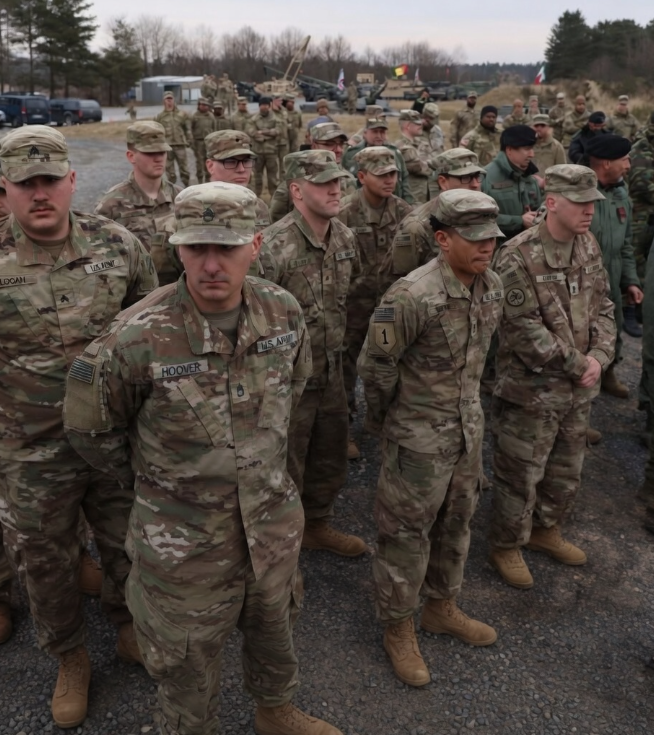
The United States Department of Defense has ordered the withdrawal of approximately 5,000 U.S. troops from Germany over the next six to twelve months, according to Pentagon statements reported by multiple outlets. The move marks a significant change in the American military presence in Europe and comes during growing tensions between the Trump administration and several NATO allies over the conflict involving Iran.
Germany currently hosts one of the largest U.S. troop deployments outside the United States, with roughly 35,000 to 38,000 service members stationed there. American bases in Germany, including Ramstein Air Base, serve as critical logistics, intelligence, and command hubs for operations in Europe, Africa, and the Middle East. Even after the reduction, the U.S. would still maintain a substantial presence in the country.
Pentagon spokesperson Sean Parnell said the decision followed a review of U.S. force posture in Europe and reflected “theater requirements and conditions on the ground.” Officials have also framed the move as part of a broader strategy encouraging European nations to assume greater responsibility for their own defense.
The announcement comes amid an escalating political dispute between Donald Trump and Friedrich Merz. Merz recently criticized Washington’s handling of the Iran conflict, saying the United States appeared to be “humiliated” by Iranian leadership and lacked a clear exit strategy. Reports indicate administration officials viewed those remarks as unhelpful, and some linked the troop decision directly to that diplomatic rift.
The withdrawal may involve removing an Army brigade combat team and canceling a previously planned deployment of long-range missile systems to Germany. If completed, troop levels in Europe would reportedly return to roughly pre-2022 levels, before the expansion that followed Russian invasion of Ukraine.
Reaction has been mixed. Some U.S. lawmakers and NATO officials worry the drawdown could weaken alliance unity and embolden Russia. Others in Europe say it underscores the need for the continent to strengthen its own defense capabilities. NATO officials have said they are seeking more details about the U.S. decision.
Overall, the move reflects both strategic military recalibration and growing strain in transatlantic relations.