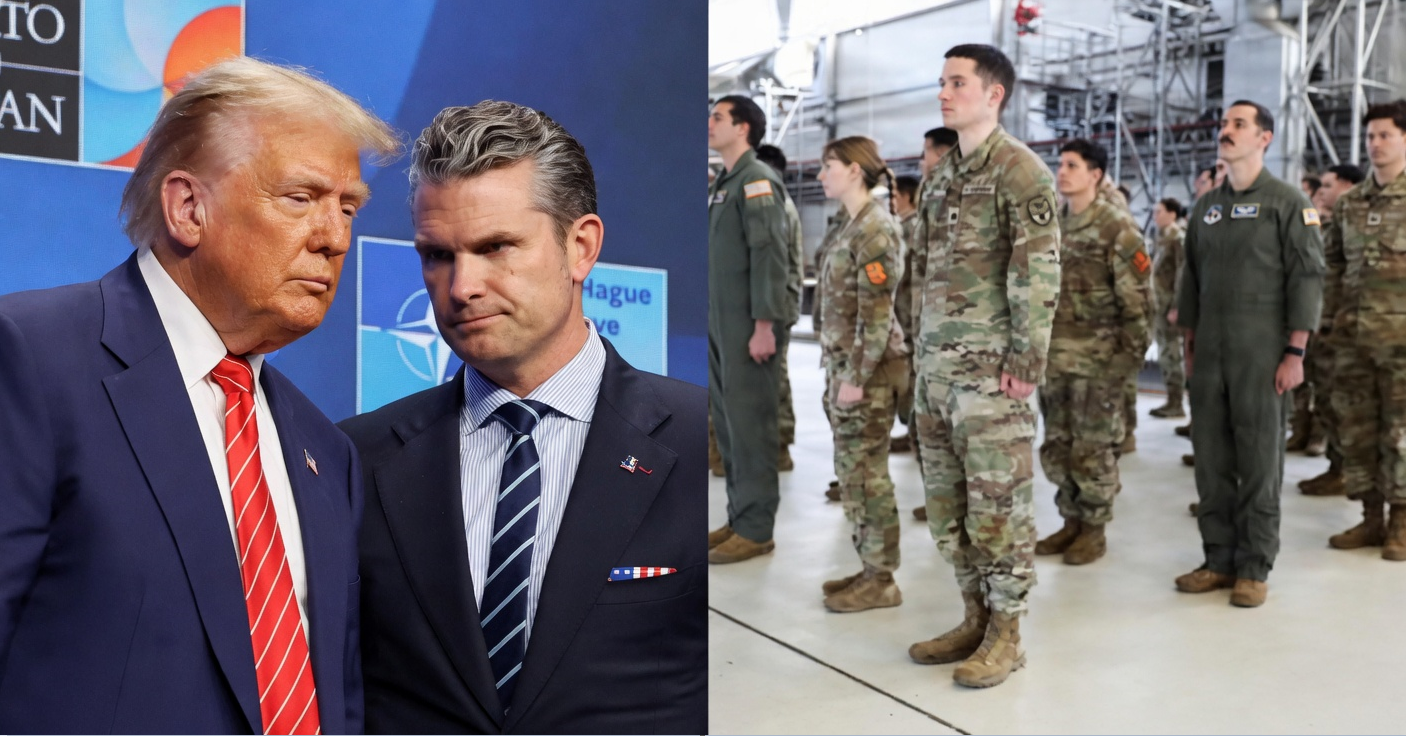
President Donald Trump’s new order to withdraw 5,000 U.S. troops from Germany has intensified debate over America’s military posture in Europe and raised questions about how much authority Congress has to stop or slow the move. According to Pentagon spokesperson Sean Parnell, the reduction will take place over the next six to twelve months. The decision comes amid rising friction between the Trump administration and several NATO allies over support for U.S. strategy in the Iran conflict.
Congress has recently placed restrictions on large troop reductions in Europe. Under the latest defense legislation, the Pentagon cannot lower total U.S. troop levels on the continent below 76,000 without first submitting a formal assessment and certifying to lawmakers that the change would not damage American or NATO security interests. While that does not completely block a withdrawal, it creates procedural hurdles and gives Congress leverage through oversight and funding powers.
However, Trump still holds broad authority as commander in chief to reposition troops between countries. That means the administration could potentially move forces out of Germany, Spain, or Italy while keeping the total troop presence in Europe above the 76,000 threshold. Such a strategy could avoid triggering the most direct congressional restrictions, although major relocations would still require money, logistics planning, and likely political scrutiny.
The troop drawdown follows disputes with several European governments. Germany, Spain, and Italy have reportedly resisted certain U.S. requests tied to Iran-related military operations. Trump criticized those countries publicly, saying Italy had not been helpful and Spain had been “horrible” for limiting use of jointly operated bases. He also suggested he was considering troop withdrawals from multiple countries, asking rhetorically why the U.S. should continue current deployments.
Tensions with Germany appear especially sharp. Trump recently said the U.S. was reviewing troop levels after German Chancellor Friedrich Merz commented that Washington was being “humiliated” by Iran. Merz later sought to cool the dispute, saying Germany remains in close and trusting contact with Washington and supports fair burden-sharing within the alliance. German Foreign Minister Johann Wadephul also emphasized the strategic importance of Ramstein Air Base, calling it essential to both countries.
Ramstein and other facilities in Germany play a major role in U.S. global operations. Germany hosts about 36,000 American troops, Italy around 13,000, and Spain roughly 4,000. Bases in Germany and Italy serve as critical logistics centers for operations in Europe, Africa, and the Middle East. Ramstein Air Base and Landstuhl Regional Medical Center are especially valuable assets that would be difficult to replace quickly elsewhere.
Defense experts say Trump likely has legal authority to reposition forces but question the wisdom of doing so during a period of global instability. Analysts note that Russia remains a serious threat in Eastern Europe, while European bases also support missions involving North Africa and the Middle East. Pulling troops for political reasons rather than strategic necessity, they argue, could weaken deterrence and complicate military readiness.
Congress has intervened before. During Trump’s first term, he announced plans in 2020 to withdraw about 12,000 troops from Germany over burden-sharing disputes. Lawmakers responded by adding certification requirements to defense bills, and the effort was never fully carried out.
So far, lawmakers have not publicly mounted a major response to the latest move. But if the administration expands withdrawals or appears to weaken NATO during the Iran conflict, Capitol Hill could again become a battleground over presidential war powers and America’s role in Europe.