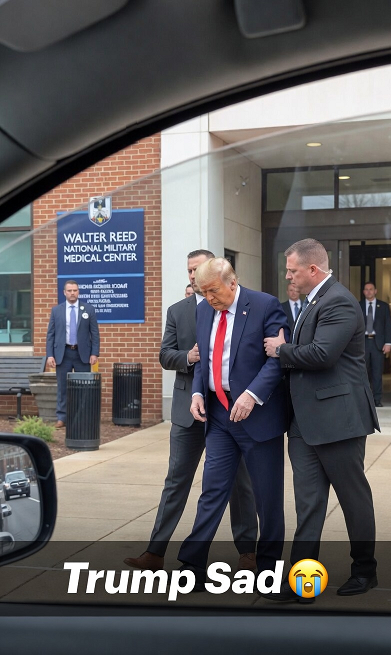
Health of former U.S. President Donald Trump highlights how quickly rumors can spread in today’s digital environment, especially when involving a high-profile public figure. The discussion reportedly began after a series of unexpected changes to Trump’s public schedule, including notice that he would not attend certain planned events on April 4. Because Trump is known for maintaining a busy and visible schedule, the adjustments immediately attracted attention.
Soon after, social media users began circulating claims that Trump had been admitted to Walter Reed National Military Medical Center. Although these claims were not verified, they spread rapidly across platforms such as X, Facebook, and various online forums. As often happens online, repeated sharing gave the impression of credibility, and some posts began presenting the rumors as established fact despite no official confirmation.
The rapid spread of these claims demonstrates how social media algorithms can amplify emotionally charged or attention-grabbing content regardless of accuracy. Posts involving the health of a former president naturally generate strong reactions, making them especially likely to gain visibility. Once users begin reacting, reposting, and commenting, speculation can quickly become a trending topic.
As concern grew, official representatives issued statements denying that Trump had been hospitalized. According to those responses, he remained at his residence and continued normal activities. Officials also said there had been no medical emergency. Their goal was to reassure the public and halt the spread of misinformation.
The episode also revived interest in Trump’s previously disclosed health matters. Earlier reports had noted that he had chronic venous insufficiency, a common circulatory condition affecting veins in the legs, especially among older adults. Medical experts generally describe the condition as manageable with routine treatment and monitoring. Officials indicated that no recent change in his health status had occurred and that the condition was unrelated to the current rumors.
Public reaction was mixed. Some people expressed genuine concern, while others doubted the rumors immediately. Many users urged patience and called for waiting until credible sources confirmed any developments. Fact-checking organizations and established news outlets also worked to verify the claims and clarify what was known.
The broader lesson is the importance of relying on verified information, especially regarding health. False claims can create unnecessary alarm, distort public perception, and fuel misleading media narratives. For major political figures, even routine schedule changes can spark outsized speculation because of their visibility and influence.
This incident also reflects the continuing challenge of digital misinformation. Technology allows information to spread faster than ever, but corrections often move more slowly than the original rumor. That makes media literacy increasingly important—understanding how online information is created, shared, and manipulated.
In the end, no confirmed evidence supported claims that Trump had been hospitalized. Official statements said he continued normal activities. The episode serves as a reminder that in the digital age, speed and virality often outpace facts, making critical thinking and source verification essential for informed public discussion.