Reports emerged of a tense maritime incident in the Strait of Hormuz involving Iranian forces and a United States naval vessel, though the details remain disputed and not independently verified.
According to initial claims circulated through Iranian state-aligned media, Iranian forces allegedly fired missiles at a U.S. warship after it attempted to enter or approach the strategically sensitive Strait of Hormuz. Some versions of the report suggested the vessel had been struck, while others described the action as a warning strike intended to deter entry into the area. These reports framed the incident as a demonstration of Iran’s readiness to defend its territorial waters and enforce control over one of the world’s most important maritime chokepoints.
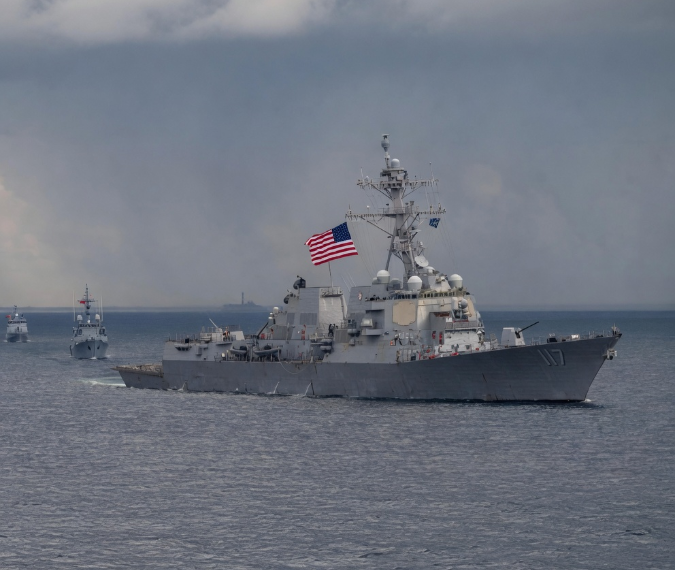
However, U.S. military officials quickly rejected the claim that any American warship was hit. Statements attributed to U.S. Central Command indicated that no U.S. Navy vessel had been struck and that all ships operating in the region remained fully functional and continued normal operations. American officials characterized the situation as a maritime encounter rather than an exchange of missile fire resulting in damage.
As a result, the incident is widely understood in two very different ways depending on the source. Iranian-linked accounts describe direct missile engagement and escalation, while U.S. statements emphasize de-escalation, denying any successful strike and suggesting that standard naval operations continued without disruption. No independent verification from neutral observers has confirmed that a missile strike actually impacted a U.S. ship.
The Strait of Hormuz, a narrow waterway between Iran and Oman, is one of the most strategically significant shipping routes in the world, with a large share of global oil shipments passing through it. Because of its importance, the region has long been a flashpoint for military tensions between Iran and Western naval forces, particularly the United States.
Incidents in this area often involve overlapping narratives, rapid information releases, and competing claims from involved parties before full verification is possible. In this case, the lack of corroborating evidence and the direct contradiction between Iranian and U.S. statements has left the situation unresolved in public reporting.
At present, the most cautious assessment is that a confrontation or warning engagement occurred involving Iranian forces and a U.S. warship operating near the Strait of Hormuz, but claims of a successful missile strike remain unconfirmed and are disputed by U.S. authorities.