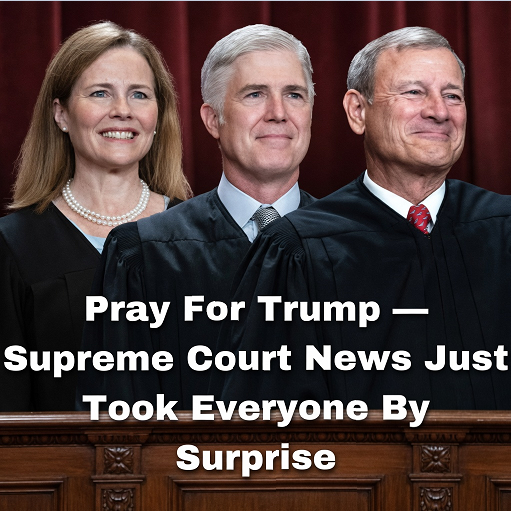
Concerns among members of the U.S. Supreme Court about threats against federal judges, political hostility surrounding court decisions, and public perceptions that the judiciary has become overly politicized.
Neil Gorsuch addressed the issue during an interview with Fox News, warning that rising political tensions and increasingly aggressive public rhetoric pose dangers to the judiciary and the broader legal system. Gorsuch emphasized the importance of civil discourse, saying that violence should never be accepted as a response to judicial decisions.
His comments come after years of heightened security concerns surrounding Supreme Court justices, particularly following the 2022 leak of the Court’s draft opinion in Dobbs v. Jackson Women’s Health Organization. The ruling ultimately overturned Roe v. Wade and ended the federal constitutional right to abortion, triggering nationwide protests and demonstrations outside justices’ homes.
The article specifically references the attempted assassination of Brett Kavanaugh in June 2022. According to federal authorities, California resident Nicholas John Roske traveled to Kavanaugh’s Maryland home carrying weapons and tactical equipment. Roske later called 911 on himself after seeing federal marshals stationed outside the residence and reportedly admitted he intended to kill the justice.
Although Gorsuch avoided directly commenting on individual incidents, he stressed that the Court depends on both transparency and confidentiality. He noted that the public can now listen to oral arguments in real time, which promotes openness, but added that justices also need private discussions in order to debate legal issues candidly and independently.
The article also highlights remarks made by Chief Justice John Roberts during a legal conference in Hershey, Pennsylvania. Roberts defended the Court against accusations that its conservative majority acts as a political extension of the Republican Party. He argued that many Americans misunderstand the judicial role and incorrectly assume justices are making policy decisions rather than interpreting the Constitution and existing law.
Roberts acknowledged that Supreme Court rulings are often unpopular and politically controversial, but insisted that the justices are guided by legal interpretation rather than partisan interests. He warned that viewing the Court as simply another political institution threatens public confidence in the judiciary and weakens the constitutional separation of powers.
The article frames these concerns within the broader climate of political polarization in the United States, where major Supreme Court decisions increasingly generate public backlash, protests, and accusations of judicial activism from both sides of the political spectrum. It also notes that critics — particularly some Democrats and progressive activists — have accused the Court’s conservative majority of politicizing its rulings on issues such as abortion, executive power, and voting rights.
Ultimately, the piece portrays both Gorsuch and Roberts as defending judicial independence while warning against threats, intimidation, and growing distrust directed at the federal court system.