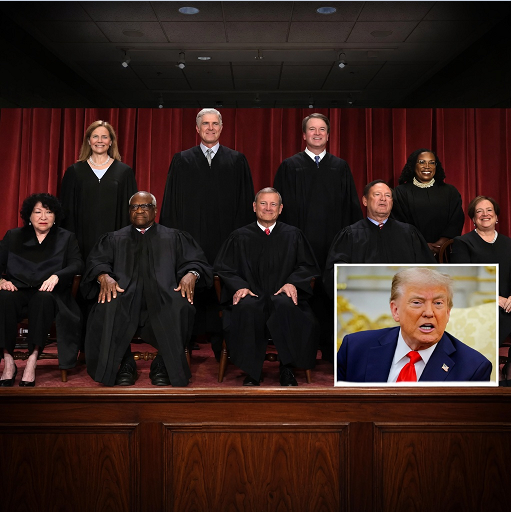
The Supreme Court of the United States issued a major ruling against California’s aggressive climate regulations, allowing energy producers to move forward with a lawsuit challenging the federal government’s approval of the state’s strict vehicle emissions policies. In a 7-2 decision, the court ruled that fuel producers have legal standing to sue the United States Environmental Protection Agency over California’s push to dramatically expand electric vehicle requirements by 2035.
The case centers on California’s plan, strongly backed by Gov. Gavin Newsom, to phase out most new gasoline-powered vehicles as part of the state’s carbon-neutrality strategy. Critics argue the mandates unfairly target the energy and automotive industries while forcing consumers toward expensive electric vehicles.
Justice Brett Kavanaugh, writing for the majority, stated that businesses affected by sweeping government regulations cannot simply be denied access to the courts. He emphasized that the EPA’s approval of California’s rules could still face legal scrutiny and noted that the agency itself has repeatedly changed its interpretation of whether the Clean Air Act actually authorizes California to regulate greenhouse gas emissions in this way.
The ruling represents another setback for California’s climate agenda and follows recent actions by Donald Trump, who reportedly signed resolutions overturning portions of the state’s environmental policies. Trump allies and many conservatives view California’s emissions standards as examples of federal overreach and government interference in consumer choice.
EPA Administrator Lee Zeldin also announced plans to roll back the EPA’s 2009 “Endangerment Finding,” a landmark determination made during the Barack Obama administration that classified greenhouse gases as threats to public health. That finding became the legal foundation for years of federal climate regulations affecting cars, trucks, power plants, and industry.
Critics of the Endangerment Finding argue the Clean Air Act was originally designed to regulate traditional pollutants like smoke and toxic chemicals, not carbon dioxide emissions produced broadly throughout the economy. Opponents also claim the resulting regulations imposed enormous economic costs on businesses and consumers, especially through mandates encouraging rapid adoption of electric vehicles.
Supporters of the climate rules, however, maintain that the policies are necessary to reduce emissions, combat climate change, and encourage technological innovation in cleaner transportation. The court’s ruling does not strike down California’s mandates immediately, but it opens the door to potentially significant legal challenges that could reshape U.S. climate policy for years to come.