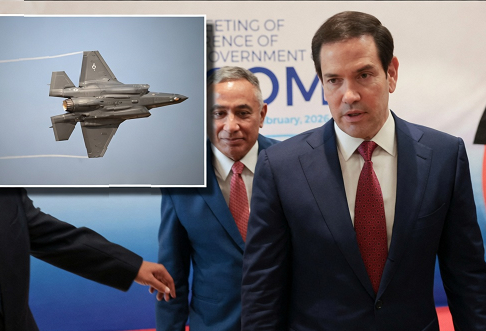
Karoline Leavitt stated that senior congressional leaders were informed before a joint U.S.-Israeli military operation against Iran, responding to criticism that Donald Trump may have acted without proper congressional authorization. According to Leavitt, Marco Rubio contacted members of the so-called “Gang of Eight” before the strikes and successfully briefed seven of the eight lawmakers. The “Gang of Eight” includes the top Republican and Democratic leaders in the House and Senate, along with the chairs and ranking members of the congressional intelligence committees.
Leavitt explained that Trump monitored the military situation overnight from Mar-a-Lago with members of his national security team and also spoke directly with Israeli Prime Minister Benjamin Netanyahu. House Speaker Mike Johnson later confirmed that congressional leaders had received detailed briefings earlier in the week regarding possible military action against Iran.
The controversy quickly intensified because critics argued that notifying only the Gang of Eight may not satisfy constitutional requirements for congressional approval of military operations. Under the 1947 National Security Act, Congress must be kept informed about significant intelligence activities, but presidents from both political parties have historically interpreted this to mean that briefings to the Gang of Eight are sufficient in highly sensitive national security situations.
Opponents of the strikes, including Thomas Massie, argued that the military action represented an unauthorized act of war. Massie publicly criticized the operation and joined with Ro Khanna in preparing legislation that would require explicit congressional approval before additional military strikes on Iran could occur. Their effort reflected growing bipartisan concern in Congress over presidential war powers and the balance between executive authority and legislative oversight.
At the same time, Rubio announced additional measures targeting Iran. He formally designated Iran as a state sponsor of wrongful detention, accusing the Iranian government of detaining Americans and foreign nationals for political leverage. Rubio referenced Iran’s history of hostage-taking dating back to the 1979 U.S. Embassy crisis and stated that the Trump administration was committed to protecting Americans abroad. He noted that Trump had signed an executive order addressing wrongful detention and that Congress later passed the Countering Wrongful Detention Act of 2025 to strengthen those protections.
Rubio warned that further measures could follow if Iran continued detaining foreign citizens, including possible travel restrictions involving U.S. passports for travel to or through Iran. Amid the escalating tensions, the State Department also announced that Rubio canceled a planned diplomatic trip to Israel because of the developing crisis.
The White House defended Trump’s actions by arguing that the president acted within his constitutional authority as commander in chief and that congressional leaders had been properly informed in advance. However, the episode reignited a longstanding debate in Washington over how much power presidents have to conduct military operations without formal approval from Congress.
The situation also underscored rising tensions between the United States and Iran, while highlighting the close military coordination between the U.S. and Israel. As lawmakers continued debating executive authority and war powers, concerns grew about the possibility of broader regional escalation and whether Congress would attempt to impose new limits on future military action.