President Donald Trump’s administration is pursuing an intensified pressure campaign against Cuba that officials and analysts describe as an “energy quarantine,” aimed at weakening the country’s communist government, which is already facing a severe and prolonged economic crisis. The policy is having significant humanitarian and social consequences for Cuba’s roughly 10 million residents, who are experiencing worsening shortages of fuel, food, clean water, and medicine.
According to the reporting, the U.S. fuel blockade is deepening an economic collapse that has been developing for decades. Energy constraints have made transportation and infrastructure more unreliable, which in turn disrupts water distribution systems and supply chains for essential goods. Public health concerns are also growing, with shortages contributing to what Cuban analysts describe as multiple overlapping health crises. Sebastián Arcos, interim director of the Cuban Research Institute at Florida International University, said that repression inside Cuba is increasing as the government feels cornered, while also noting that the leadership has historically shown resilience in surviving crises. However, he expressed skepticism that the current situation could be sustained indefinitely by the ruling system.
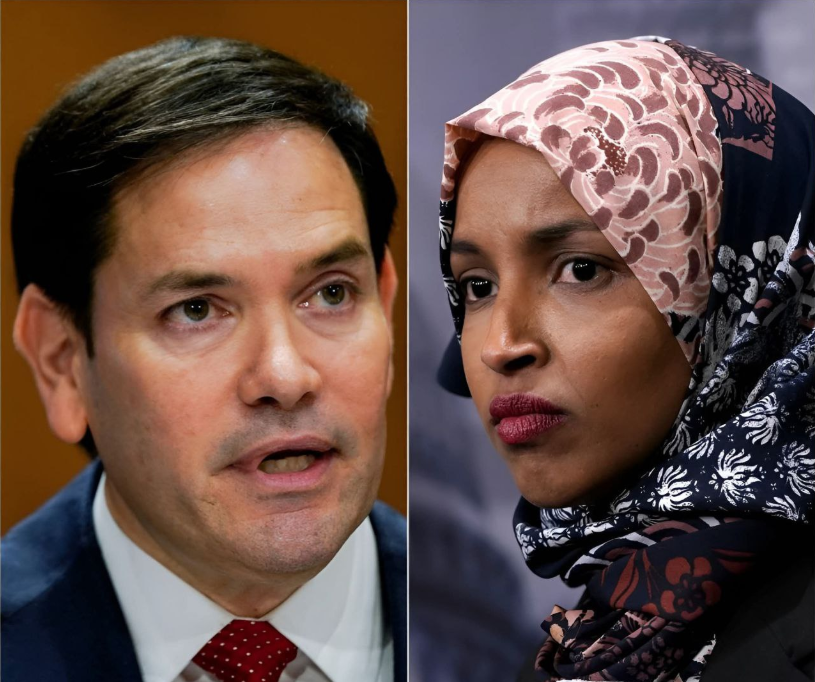
Politically, Trump has suggested that the United States could pursue what he described as a “friendly takeover” of Cuba, drawing comparisons to past U.S. approaches in other countries, including Venezuela. The idea implies maintaining elements of the existing system while shifting leadership behavior and economic alignment rather than implementing immediate full-scale regime change. At the same time, Secretary of State Marco Rubio is reportedly playing a central role in shaping U.S. strategy toward Havana.
Reports indicate that Rubio has been involved in high-level regional diplomatic discussions, including alleged contact with Raúl Guillermo Rodríguez Castro, the grandson of former Cuban leader Raúl Castro. Rodríguez Castro is described as part of the inner circle of Cuba’s power structure through his role as Castro’s bodyguard and alleged involvement in GAESA, a military-linked conglomerate that plays a major role in Cuba’s economy. GAESA is reported to control significant financial assets, with estimates cited in the report placing its holdings at around $18 billion. A reported meeting between Rubio and Rodríguez Castro allegedly occurred on the sidelines of a Caribbean regional conference in St. Kitts and Nevis.
Despite the pressure campaign, Rubio has publicly stated that the U.S. position does not require immediate regime change, emphasizing instead that “Cuba needs to change” gradually. This suggests an approach focused on incremental political and economic transformation rather than abrupt collapse.
The article also situates U.S. policy toward Cuba within a broader context of escalating international tensions, particularly involving Iran. It notes that the United States and Israel recently carried out coordinated military actions against Iran, which prompted questions in Congress about whether proper authorization procedures were followed. White House Press Secretary Karoline Leavitt stated that senior congressional leaders, including members of the so-called “Gang of Eight,” were notified ahead of the operation. However, debate persists over whether such notifications meet legal requirements under the 1947 National Security Act, which mandates that Congress be kept fully informed of significant intelligence activities.
Some lawmakers, including Representatives Thomas Massie and Ro Khanna, have criticized the administration’s actions and sought to limit presidential authority to conduct strikes without explicit congressional approval. Meanwhile, administration officials emphasized that President Trump monitored developments closely and maintained communication with national security leadership and foreign counterparts.
In addition, Secretary of State Rubio announced new measures regarding Iran, including its designation as a state sponsor of wrongful detention, along with potential restrictions on U.S. travel policies if Iranian behavior does not change. These developments reflect a broader foreign policy posture characterized by heightened pressure tactics, expanded executive action, and ongoing debate over the balance of war powers between the presidency and Congress.