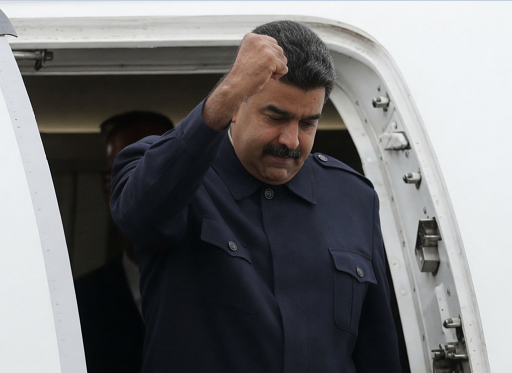
Suggested that Venezuelan leader Nicolás Maduro is preparing to return to Venezuela or “return to his patria.” These reports quickly spread across social media platforms, causing confusion and debate among users trying to understand the political situation in Venezuela. However, according to the information presented in the article, there is currently no verified evidence supporting claims that Maduro is returning to the country. Instead, the article states that he remains in custody in the United States following a dramatic military operation earlier in 2026.
According to the narrative described, Maduro was captured during a major U.S. military operation that allegedly took place on January 3, 2026. The operation reportedly involved coordinated air and ground forces, intelligence support from multiple agencies, and the extraction of Maduro and several close associates from Venezuela. Afterward, he was transferred to New York, where he is said to be facing federal criminal charges. These charges reportedly include drug trafficking conspiracy, narco-terrorism allegations, and related offenses. The article states that Maduro has pleaded not guilty and remains detained while legal proceedings continue in the United States.
The operation is portrayed as one of the most dramatic geopolitical developments in modern Latin American history, generating widespread international attention and reactions from governments around the world. According to the article, the event fundamentally changed Venezuela’s political landscape and triggered ongoing debates about sovereignty, international law, and regional stability.
Following Maduro’s reported removal from power, the article says leadership in Venezuela shifted to Delcy Rodríguez, who allegedly became acting president. Her administration is described as overseeing government operations, economic policy, and international relations while attempting to stabilize the country and rebuild diplomatic ties with other nations, including the United States.
Despite widespread rumors online, the article repeatedly emphasizes that there is no credible evidence that Maduro is preparing to return to Venezuela. It states that he remains in U.S. custody, his court proceedings are ongoing, and no official announcements or agreements suggest a release, transfer, or return. The article argues that the rumors are largely driven by misinformation, exaggerated headlines, and speculation rather than verified reporting.
A major focus of the piece is the role social media plays in amplifying unverified claims. Platforms such as X, Facebook, and other online networks are described as environments where emotionally charged stories can spread rapidly, especially when they involve controversial political figures or dramatic international events. The article explains that sensational headlines like “He is returning!” or “Breaking news!” are often designed to attract clicks and reactions rather than provide accurate information or proper context.
The political sensitivity of Venezuela’s situation also contributes to the rapid spread of rumors. Because Venezuela has experienced years of political turmoil, economic hardship, and international controversy, any news related to its leadership attracts global attention. Stories involving arrests, regime changes, or foreign intervention naturally provoke strong emotional reactions, encouraging users to share information before verifying its accuracy.
The article also highlights the diversity of international responses to Maduro’s reported capture. Some governments are said to have criticized the operation and raised concerns about sovereignty and international law, while others supported efforts aimed at political change in Venezuela. These differing reactions demonstrate the complex geopolitical implications surrounding Venezuela’s future and its relationship with the international community.
Inside Venezuela, the article describes a country still undergoing political uncertainty and debate. Discussions reportedly continue regarding democratic reforms, future leadership, and the direction of the nation moving forward. At the same time, the article notes that Maduro still retains support among portions of the population, reflecting deep divisions within Venezuelan society.
Another central theme of the piece is media literacy and the importance of verifying information before sharing it online. Readers are encouraged to consult multiple trustworthy sources, look for official statements, and remain cautious of emotionally charged viral content. The article warns that social media can oversimplify complex political situations and spread misleading narratives quickly, making it difficult for people to separate fact from speculation.
The article concludes by emphasizing that, according to the information presented, Maduro remains in U.S. custody and is not returning to Venezuela at this time. Any future developments, such as a possible release or transfer, would require significant legal and diplomatic actions along with official confirmation. Ultimately, the situation serves as a broader reminder about the challenges of navigating information in the digital age, where viral claims can spread globally long before facts are fully verified.