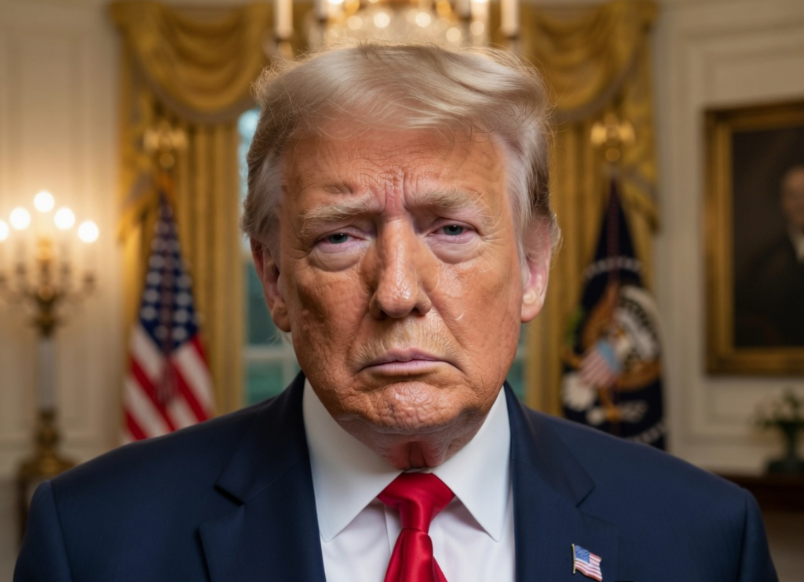
Federal prosecutors have filed a landmark criminal case against former President Donald Trump, creating one of the most significant legal and constitutional confrontations involving a former U.S. president in American history. The case centers on Trump’s actions following the 2020 presidential election, when he repeatedly claimed that widespread voter fraud had unfairly cost him reelection. Numerous government officials, courts, election administrators, and even some of Trump’s own advisors stated at the time that they found no evidence of fraud on a scale that would have changed the election outcome.
According to prosecutors, the investigation goes beyond Trump’s public statements and focuses on what they describe as a coordinated effort to overturn the certified election results. Federal authorities allege that Trump and his allies attempted to challenge legitimate electoral outcomes in several key battleground states after official counts, recounts, and legal reviews had already confirmed the results. One major allegation involves efforts to organize alternate slates of electors in states won by President Joe Biden. Prosecutors claim these alternate electors were intended to create confusion or provide a basis for contesting the certification of the election.
The indictment also highlights alleged pressure campaigns directed at state officials. Prosecutors argue that Trump and others sought to persuade state leaders to reverse or alter election results despite the absence of verified evidence supporting claims of widespread fraud. These efforts are portrayed as part of a broader strategy aimed at disrupting the lawful transfer of presidential power.
A central element of the case concerns the events surrounding the certification of the Electoral College vote on January 6, 2021, when Congress met to formally confirm Biden’s victory. The certification process was interrupted during the January 6 United States Capitol attack, an event that prosecutors argue forms part of the larger context of the alleged conspiracy. Investigators are examining the sequence of decisions, communications, and actions leading up to that day.
Among the most serious accusations is a conspiracy to violate civil rights charge. Prosecutors contend that attempts to overturn certified election results effectively sought to invalidate legitimate votes cast by American citizens. This allegation raises major constitutional questions about voting rights, democratic governance, and the peaceful transfer of power.
To secure a conviction, prosecutors must prove that Trump knowingly advanced false claims and intentionally participated in efforts to overturn the election results unlawfully. They are expected to rely heavily on internal communications, witness testimony from former advisors and officials, and documentary evidence outlining discussions and planning after the election.
Trump has strongly denied all wrongdoing. He argues that his actions were motivated by genuine concerns about election integrity and that he was exercising his rights to challenge what he believed were irregularities in the voting process. He has repeatedly described the prosecution as politically motivated and framed it as an attempt to target him because of his continued political influence.
Trump’s legal team is expected to challenge both the facts and the legal theories behind the indictment. His defense will likely argue that many of his statements and actions are protected under the First Amendment as political speech. Attorneys may also contend that presidents and candidates have broad authority to question election outcomes and pursue legal remedies when disputes arise.
Beyond the immediate courtroom battle, the case carries enormous historical and political significance. Legal experts view it as a defining test of the limits of presidential power and accountability under U.S. law. The outcome could shape future interpretations of how far political leaders can go in contesting elections and where the line exists between aggressive political advocacy and criminal conduct.