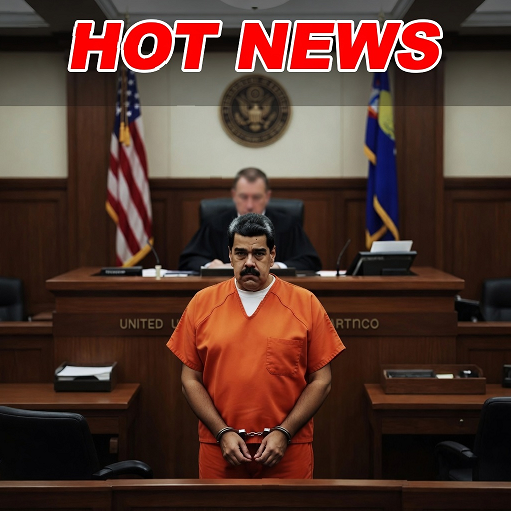
The United States Senate has become the center of a heated constitutional and political debate following a high-profile military operation in Venezuela that resulted in the capture of President Nicolás Maduro. Conducted in early January, the raid involved elite U.S. forces striking Caracas under the cover of darkness, detaining Maduro and his wife, and transferring them to New York to face longstanding narcotics and corruption charges. While the Trump administration initially framed the mission as a law-enforcement operation, critics argue the scale, sophistication, and cross-border nature of the action resemble a military campaign, raising questions about presidential authority, congressional oversight, and the definition of “hostilities” in the modern era.
The raid showcased U.S. military capabilities, including surveillance drones, stealth aircraft, and rapid extraction teams, and no American troops remained in Venezuela after the operation. Nevertheless, the unilateral nature of removing a sitting head of state without international authorization drew sharp criticism from legal experts, international observers, and members of Congress. In response, a bipartisan group of senators, led by Tim Kaine and Rand Paul, introduced a War Powers Resolution requiring congressional approval for any further U.S. military action in Venezuela. The measure sparked intense debate over the limits of executive authority, with proponents arguing that forcibly removing a foreign leader constitutes an act of war, while opponents maintained the president retains discretion to act against national-security threats, citing Maduro’s criminal status.
The Senate ultimately voted on January 14, resulting in a 50-50 tie. Vice President J.D. Vance cast the deciding vote to block the resolution, allowing the administration to maintain unilateral control. The narrow margin underscored the deep divisions between the executive branch and Congress, highlighting tensions inherent in the War Powers Clause, which grants Congress the sole authority to declare war but has been challenged by presidents claiming inherent security powers.
Internationally, the raid drew criticism for undermining norms around sovereignty and extraterritorial enforcement. Latin American governments expressed unease about unilateral operations, while protests erupted outside U.S. embassies. Regional stability and diplomatic protocols were called into question, and the extraction of a sitting president without UN approval set a potentially dangerous precedent. U.S. engagement with interim leadership, such as acting President Delcy Rodríguez, reflected efforts to stabilize the country following Maduro’s removal.
Domestically, the operation has intensified partisan debates. Supporters hail it as a decisive blow against criminal activity and a demonstration of American resolve, while critics warn of executive overreach and the erosion of democratic checks and balances. Historical comparisons, including operations in Iran (1980), Libya (2011), and Syria (2019), illustrate recurring tensions between operational necessity and constitutional limits.
The broader implications extend to the interpretation of the War Powers Resolution, congressional oversight, and the limits of presidential authority in precision raids and short-duration interventions. Legal challenges may reach the Supreme Court, testing the boundaries between law-enforcement discretion and acts of war. The Maduro raid represents a pivotal moment in U.S. governance, reshaping debates over executive power, congressional prerogatives, and international norms.
Ultimately, while the operation removed a dangerous criminal from power, it also exposed fractures in domestic political institutions and raised profound questions about the role of unilateral executive action in the modern era. The event underscores the delicate balance between national security, legal authority, and democratic accountability, offering a precedent that will influence U.S. foreign policy, congressional oversight, and global expectations of executive power for years to come.