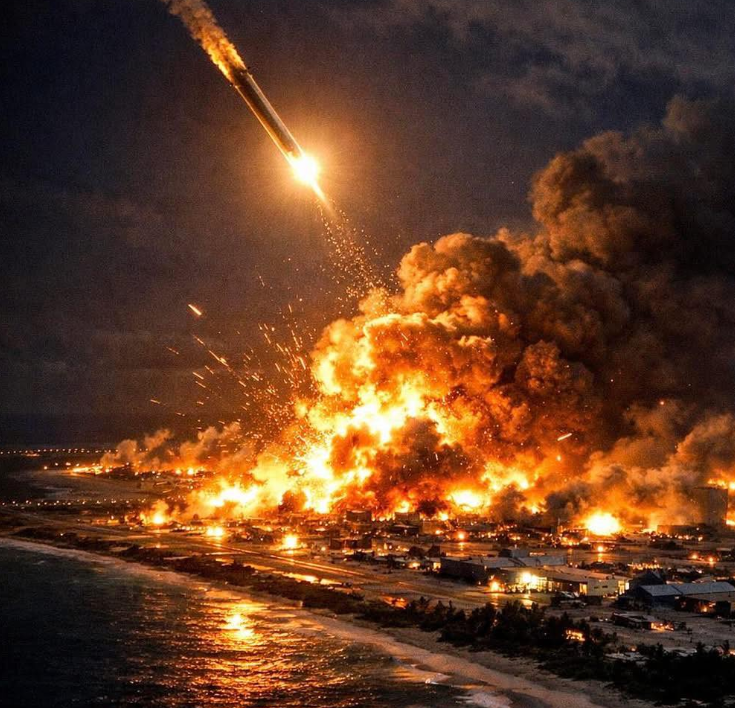
Claims that Iran launched a missile strike against the U.S. military base on Diego Garcia have circulated widely online, attracting attention because of the serious geopolitical implications such an attack would carry. Reports described a long-range missile allegedly traveling thousands of kilometers and causing significant damage to the strategically important base in the Indian Ocean. However, despite the dramatic nature of these claims, there is currently no verified evidence from credible news organizations, government agencies, or international monitoring bodies confirming that such an attack has occurred.
The story gained traction largely because it combines several elements that naturally attract public attention: a remote military installation, advanced missile technology, and the possibility of direct military confrontation between major powers. Social media platforms often amplify such stories, particularly when they use urgent language, dramatic imagery, or claims of secret developments. As a result, unverified reports can spread rapidly before facts are established.
Diego Garcia occupies a significant place in global defense planning. Located in the British Indian Ocean Territory and jointly operated by the United States and the United Kingdom, the base supports long-range bomber deployments, naval operations, intelligence gathering, surveillance missions, and logistical coordination across the Indo-Pacific and Middle East regions. Because of its strategic importance, any credible attack against Diego Garcia would represent a major international event and would almost certainly receive immediate coverage from leading global news organizations and official government sources.
At present, no such widespread confirmation exists. Reliable reporting on military incidents typically comes from official statements, verified satellite imagery, defense agencies, or established media organizations. The absence of corroboration from these sources strongly suggests that the circulating claims remain unverified and may be based on speculation, misinformation, or exaggeration.
Part of the discussion surrounding the rumor involves missile range. The reports describe a missile traveling roughly 4,000 kilometers, which falls within the category of intermediate-range ballistic missiles. While missile technology continues to evolve and some countries have developed increasingly sophisticated systems, the deployment of a long-range missile against a major military installation would have enormous diplomatic and military consequences. Such an event would be difficult to conceal and would almost certainly be documented through multiple independent sources.
The situation highlights a broader challenge in the digital age: the rapid spread of misinformation. Sensational headlines often rely on emotionally charged language, vague references to respected institutions, or unsupported claims designed to attract attention. Readers who encounter such reports should seek confirmation from multiple reputable outlets and official statements before accepting them as fact.
Verification is especially important when discussing military actions and international security. False reports can create unnecessary fear, distort public understanding, and contribute to confusion during already tense geopolitical situations. Responsible media consumption involves reading beyond headlines, checking original sources, and approaching extraordinary claims with healthy skepticism.
Ultimately, there is currently no verified evidence that Iran has launched a missile strike on Diego Garcia. While geopolitical tensions and military developments remain subjects of legitimate concern, conclusions should be based on confirmed information rather than viral speculation. Careful verification, critical thinking, and reliance on trustworthy sources remain the best tools for understanding complex international events and separating fact from rumor.