Tensions between the United States and Iran continue to attract global attention, fueled by concerns over Iran’s nuclear program, regional influence, and the possibility of military escalation. While dramatic headlines and online speculation often suggest imminent conflict, experts emphasize that the reality is far more complex. Decisions involving military action, diplomacy, and national security are shaped by decades of history, strategic calculations, and significant uncertainty.
At the center of many concerns is Iran’s nuclear program. International monitoring organizations, including the International Atomic Energy Agency (IAEA), have tracked Iran’s uranium enrichment activities for years. Iran maintains that its nuclear efforts are intended for peaceful purposes such as energy production, while some governments fear the program could eventually support nuclear weapons development. This disagreement has remained one of the primary sources of tension between Tehran and Washington.
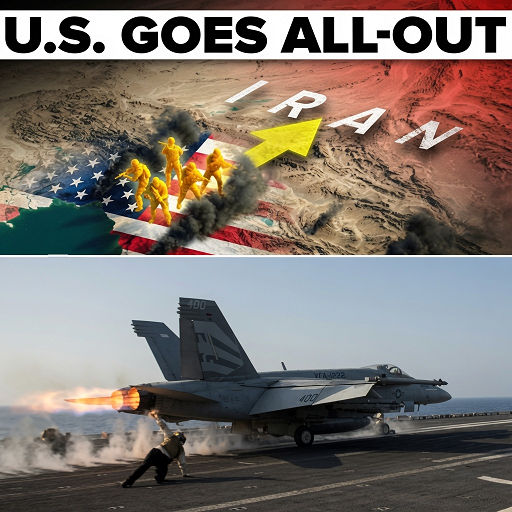
Military analysts frequently discuss the role of airpower in any potential confrontation. Modern air forces can project power, gather intelligence, and strike strategic targets without deploying large numbers of ground troops. However, many claims circulating online about massive attacks or secret operations remain unverified. In practice, military deployments and demonstrations often serve as deterrents designed to influence behavior and send political messages rather than trigger full-scale war.
The nuclear issue remains especially significant because highly enriched uranium can potentially be used in weapons programs. Although the existence of enriched uranium alone does not prove military intent, policymakers often view restrictions, inspections, and monitoring as essential tools for preventing nuclear proliferation. This concern explains why negotiations and international agreements have remained central to discussions about Iran.
Speculation about military options sometimes includes references to elite special operations forces. In theory, such units could be tasked with securing sensitive facilities or conducting high-risk missions. However, experts stress that these operations would be extraordinarily difficult. Challenges would include navigating heavily fortified sites, managing hazardous materials, overcoming resistance, and safely extracting personnel. Because of these risks, such missions are generally viewed as last-resort options rather than preferred strategies.
Iran’s geography adds another layer of complexity. Key facilities are located deep within the country, often protected by fortified and underground structures. Any operation targeting them would require extensive planning, logistics, intelligence, and support. Even reaching a target successfully would not eliminate the challenge of securing it afterward. Military planners must consider supply lines, air support, surveillance capabilities, and potential counterattacks.
Another major focus is the Strait of Hormuz, one of the world’s most important maritime chokepoints. A significant portion of global oil exports passes through this narrow waterway. Any disruption could immediately affect energy prices, international trade, and economic stability. As a result, naval deployments in the region are often aimed at protecting commercial shipping and ensuring freedom of navigation rather than preparing for large-scale combat.
Marine Expeditionary Units and other rapid-response forces are frequently deployed in regions experiencing instability. Their presence does not necessarily indicate that conflict is imminent. Instead, these forces provide flexibility for a wide range of missions, including evacuations, security operations, humanitarian assistance, and crisis response.
The modern information environment has further complicated public understanding of these tensions. Social media platforms allow rumors, manipulated content, and unverified claims to spread rapidly. Information warfare now plays an important role alongside traditional military and diplomatic activities. This makes critical thinking and reliance on credible sources increasingly important.
Despite discussions about military scenarios, most experts believe that full-scale war would carry enormous costs and risks for all sides. Consequently, governments generally focus on more limited objectives such as deterrence, sanctions, diplomacy, and targeted measures intended to manage threats without triggering broader conflict.
Ultimately, U.S.–Iran relations remain a complex and evolving issue. While military options are often discussed, diplomacy, negotiation, and strategic restraint continue to play crucial roles. Understanding the broader context behind the headlines helps provide a clearer picture of a situation that remains uncertain, sensitive, and highly consequential for regional and global stability.