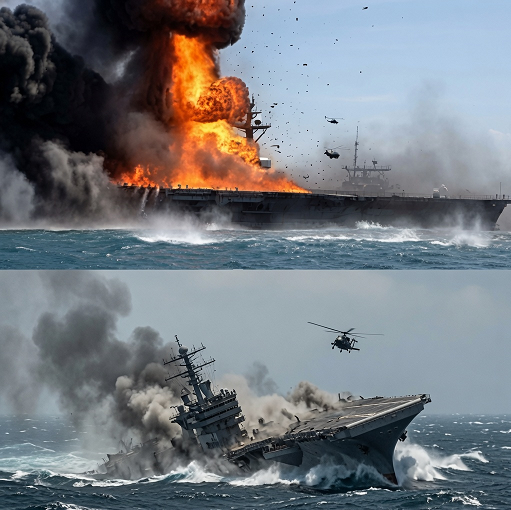
On March 20, 2026, the former USS Rodney M. Davis (FFG-60), an Oliver Hazard Perry-class guided-missile frigate, was deliberately sunk during a U.S. Navy SINKEX (Sink Exercise) operation. The exercise involved striking the decommissioned vessel with an AGM-84 Harpoon anti-ship missile to test weapon performance, assess ship survivability, and improve naval readiness under realistic combat conditions.
Commissioned in 1982 and named after Medal of Honor recipient Marine Corps Captain Rodney Maxwell Davis, the frigate was originally designed during the Cold War primarily for anti-submarine warfare, while also carrying limited surface and air defense capabilities. Over decades of service, it participated in numerous patrols and multinational exercises, contributing to maritime security operations worldwide.
After decommissioning, like other ships of its class, the vessel became eligible for alternative end-of-service roles such as transfer to allied navies, conversion into a museum ship, recycling, or use in live-fire training exercises. For this SINKEX event, the ship was carefully prepared in accordance with environmental and safety regulations, with hazardous materials, fuel, and sensitive systems removed prior to sinking.
During the exercise, a Harpoon missile struck the hull as planned. The weapon’s sea-skimming design allowed it to avoid detection and deliver a precise impact, leading to flooding and progressive structural failure. Observers noted that the ship’s compartmentalized internal design temporarily delayed sinking, demonstrating features originally intended to improve survivability in combat conditions.
SINKEX exercises serve multiple strategic purposes. They provide the Navy with valuable real-world data on missile effectiveness, hull damage response, and ship durability. They also help refine crew training protocols and improve damage control strategies for active vessels. In addition, sunken ships can function as artificial reefs, contributing to marine ecosystems after proper environmental preparation.
For veterans and former crew members, the sinking carried emotional significance, marking the final chapter in the ship’s long operational history. While decommissioning had already ended its active service, its participation in the exercise symbolized a continued contribution to naval development and collective memory.
Overall, the sinking of USS Rodney M. Davis was not a combat loss but a controlled training operation that advanced naval research and readiness. It reflected both the evolution of naval warfare technology and the enduring role of retired warships in strengthening future maritime capabilities.