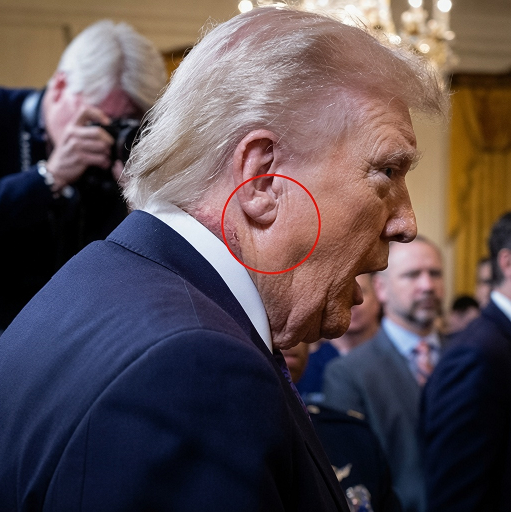
Images from a recent Medal of Honor ceremony triggered public discussion after viewers noticed a small mark on the skin of the 79-year-old president, prompting speculation about his health. What began as a minor visual detail was quickly amplified online, illustrating how easily physical appearance can become a focal point in highly visible political environments.
White House physician Dr. Sean Barbabella described the mark as part of a “preventative skin treatment,” aiming to reassure the public that it was not a cause for concern. Despite this explanation, social media users and commentators continued to analyze photographs and video footage from the ceremony, reflecting a broader pattern in which even subtle physical changes in public figures can generate widespread debate.
The president’s health has been a recurring topic of public scrutiny, with observers frequently noting small details such as bruising, pauses in speech, or signs of fatigue during appearances. These observations are often interpreted in different ways depending on political perspective, contributing to ongoing speculation and discussion.
Political analyst David Pakman referenced a faint crease on the president’s earlobe during commentary, noting that some research has loosely associated such features with cardiovascular risk. However, he also acknowledged that the scientific evidence for such claims is not definitive and remains debated within the medical community.
The situation underscores a broader challenge in modern political communication: balancing transparency about a leader’s health with the risk of overinterpretation in an era of constant visual documentation and social media amplification. Minor physical characteristics can rapidly become symbolic, shaping public narratives that extend beyond verified medical information.
Ultimately, the episode reflects how public figures—especially those in high office—are subject to intense scrutiny, where even small and medically insignificant details can evolve into national conversations about fitness, trust, and leadership stability.