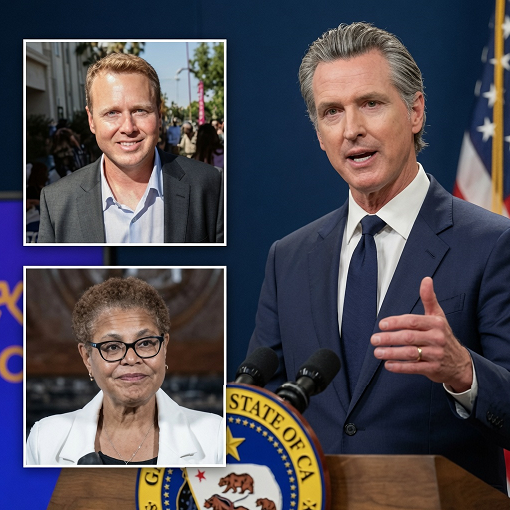
Criticism of California’s election system following the slow counting of ballots in the state’s recent primary elections and the response from Governor Gavin Newsom. As vote counting continued days after Election Day, critics questioned the lengthy process, while Newsom and his supporters argued that the delays are the result of laws designed to maximize voter participation rather than evidence of wrongdoing.
To address concerns, Newsom’s office shared a video featuring journalist Elex Michaelson explaining why California often takes longer than other states to finalize election results. According to the video, California law allows voters additional time to cast and return mail ballots, including ballots submitted close to Election Day. Supporters of the system argue that these policies increase accessibility and ensure more residents can participate in elections, even if the tradeoff is a slower counting process.
The video contrasted California’s approach with states such as Florida and Texas, led by Governors Ron DeSantis and Greg Abbott, respectively. Michaelson suggested that those states prioritize rapid vote counting, whereas California prioritizes giving voters more flexibility and time to submit ballots.
Newsom acknowledged public frustration over the pace of counting, stating that he also wished results could be finalized more quickly. However, critics pointed out that he did not propose specific reforms to accelerate the process, despite Democrats holding significant power in California’s government.
Opponents of the current system argue that lengthy ballot-counting periods can undermine public confidence in election outcomes. Many social media users and commentators claimed that delays create opportunities for suspicion and allegations of manipulation, even when there is no evidence of misconduct. Critics contend that election systems should provide both accessibility and timely results, arguing that prolonged uncertainty can damage trust in democratic institutions.
One of the strongest critiques came from commentator Jarrett Stepman, who argued that California’s election procedures have produced recurring delays since major voting reforms were adopted in 2016. Those reforms expanded mail voting and allowed ballots postmarked by Election Day to be counted after the election, contributing to extended counting periods. Stepman argued that while these policies may increase voter access, they also prolong uncertainty and create perceptions of unfairness.
The debate has become especially intense because of the unresolved Los Angeles mayoral race. Incumbent Mayor Karen Bass appears headed for the runoff, but the contest for the second runoff position remains unsettled. Republican candidate Spencer Pratt initially held a significant lead over Democratic City Council member Nithya Raman. However, as additional mail ballots have been counted, Raman has gradually narrowed the gap.
This shift has fueled speculation among critics who question why later-counted ballots appear to be helping Raman. Some observers point to election prediction markets, which have increasingly favored her chances despite Pratt’s earlier advantage. Critics argue that such developments naturally invite scrutiny, especially when vote counting continues for days after Election Day.
Supporters of California’s system respond that late-counted ballots often come from demographic groups and regions that historically lean Democratic, making shifts in vote totals neither unusual nor suspicious. Election officials maintain that every eligible ballot deserves to be counted and that accuracy is more important than speed.
Ultimately, the controversy reflects a broader national debate about election administration. One side emphasizes voter access and comprehensive ballot counting, while the other stresses rapid results and public confidence. As California continues counting ballots and determining final outcomes, the discussion over whether the state has struck the right balance between accessibility, security, and efficiency is likely to continue.