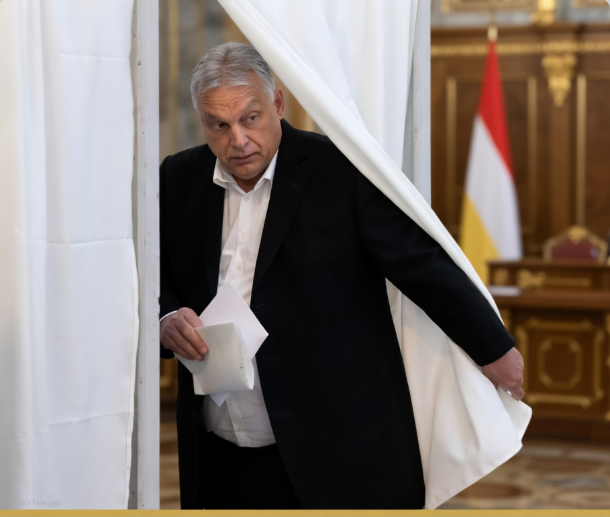
Hungarian Prime Minister Viktor Orbán conceded defeat following a landmark election result that ends his 16-year hold on power, marking a dramatic political shift in Hungary and sending shockwaves across Europe. Partial official results showed opposition leader Péter Magyar and his Tisza party securing a decisive lead, with more than 52% of the vote compared to roughly 38% for Orbán’s ruling Fidesz party, with about 60% of ballots counted at the time.
Magyar quickly declared victory, thanking supporters as thousands gathered along the Danube in Budapest to celebrate what many see as a historic turning point. Orbán, addressing his own supporters, acknowledged the outcome and stated that he had congratulated the winning party, adding that his movement would continue serving the country from the opposition.
The election drew record turnout, exceeding 77%, the highest in Hungary’s post-Communist history, reflecting the high stakes and deep divisions surrounding the vote. Both sides reported alleged electoral irregularities, raising the possibility of disputes as final results are confirmed.
Orbán’s defeat represents a major blow to one of Europe’s most influential and controversial leaders. Once a liberal reformer, he transformed into a nationalist figure closely aligned with Russia and admired by global far-right movements, including allies of Donald Trump. His long tenure was marked by strained relations with the European Union, particularly over issues such as media freedom, judicial independence, and minority rights. Critics have accused his government of democratic backsliding and corruption, while supporters praised his strong stance on national sovereignty and anti-globalist policies.
A key issue in the election was Hungary’s geopolitical orientation. Orbán maintained close ties with Vladimir Putin and resisted European efforts to support Ukraine, even blocking major EU aid packages. In contrast, Magyar framed the election as a choice between aligning with democratic Europe or drifting further toward Russia, campaigning on promises to tackle corruption, improve public services, and restore Hungary’s standing within Europe.
Magyar’s rapid rise has been notable. A former insider within Fidesz, he broke with Orbán in 2024 and quickly built a broad-based opposition movement. His campaign focused on everyday issues such as healthcare, transportation, and governance, resonating with voters dissatisfied with the status quo.
Despite the victory, challenges remain. Orbán’s influence over media, electoral structures, and political networks could complicate the transition, and both camps have raised concerns about election integrity. Additionally, Hungary’s deeply polarized political landscape may pose obstacles to unity and reform.
Internationally, the result is being closely watched, given Orbán’s outsized role in shaping right-wing populist politics. The outcome may reshape Hungary’s relationship with the EU and influence broader political trends across the continent.