Tensions in the Middle East have intensified following reports that commercial vessels transiting the Strait of Hormuz were attacked, raising concerns about maritime security, global trade, and energy supplies. The incident comes amid a broader period of regional instability and has drawn attention from governments, shipping companies, and international markets due to the strategic importance of the waterway.
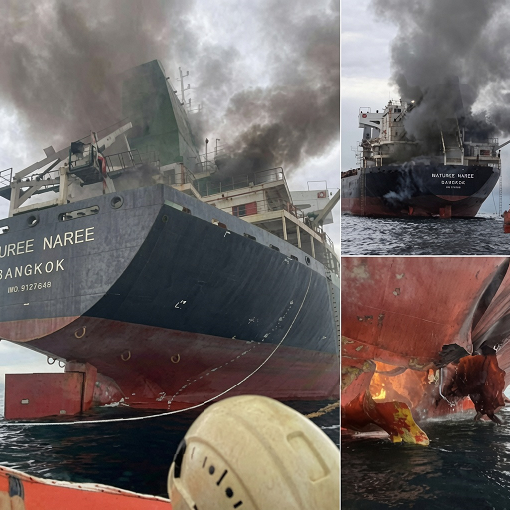
According to reports, Iranian officials had previously warned that ships connected to the United States, Israel, or allied nations could face action if they attempted to pass through the strait without authorization. Maritime monitoring organizations later reported that several commercial vessels were struck by projectiles. One Thai-flagged bulk carrier reportedly suffered a fire in its engine room, forcing part of the crew to evacuate affected sections of the ship. Two additional vessels, registered in Japan and the Marshall Islands, also sustained damage, though less severe. Authorities have not reported major casualties, and investigations into the attacks remain ongoing.
The Strait of Hormuz is one of the world’s most strategically significant shipping routes. Located between Iran and the Arabian Peninsula, it connects the Persian Gulf with the Gulf of Oman and serves as a critical corridor for global energy exports. Roughly one-fifth of the world’s oil supply passes through the narrow waterway, making it essential for major energy-producing countries such as Saudi Arabia, Iraq, Kuwait, and the United Arab Emirates. Any disruption to traffic through the strait can have immediate consequences for global commerce and energy markets.
In response to the reported attacks, shipping companies and maritime organizations have advised vessels operating in the region to exercise extreme caution. Some ships have slowed transit, anchored temporarily, or altered their routes. Insurance providers have also designated the area as high risk, increasing premiums for vessels operating in the Gulf region. These measures have raised concerns about potential delays in international trade and higher transportation costs.
The maritime incident coincides with broader military tensions across the region. Recent military operations involving U.S. and allied forces, as well as Iranian responses, have contributed to an atmosphere of heightened uncertainty. Analysts warn that any attacks on civilian or commercial shipping could increase the risk of further escalation and draw additional actors into the crisis.
Economic concerns have also emerged. Prolonged disruptions in the Strait of Hormuz could affect global oil supplies, potentially increasing fuel prices and creating challenges for countries heavily dependent on Gulf energy exports. Governments in Asia, Europe, and elsewhere are closely monitoring developments and evaluating contingency plans.
International leaders have called for restraint and emphasized the importance of protecting civilian shipping and preserving freedom of navigation. As investigations continue and military forces remain on alert, the situation around the Strait of Hormuz remains uncertain. The coming days will be critical in determining whether tensions ease through diplomacy or continue to escalate, with potentially significant consequences for regional stability and the global economy.