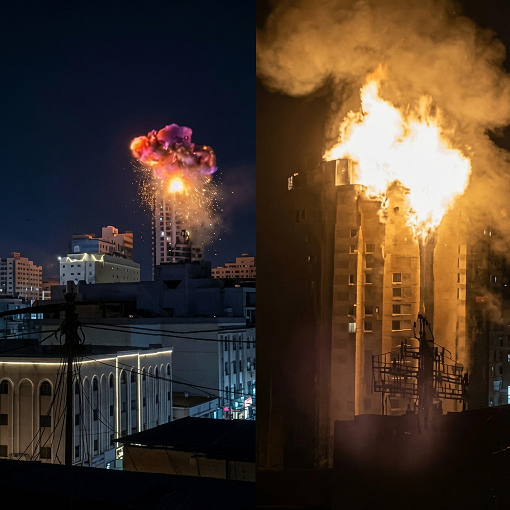
Iranian missile strikes on U.S. military installations across the Persian Gulf describe a potentially serious and rapidly developing situation. However, in any breaking military event, especially one involving multiple countries and strategic bases, verification from official and independent sources is essential before drawing conclusions.
The claims reference possible attacks on major U.S. military facilities, including bases in Qatar, the United Arab Emirates, and Bahrain. If confirmed, such strikes would represent a significant escalation in regional tensions and could have far-reaching security, diplomatic, and economic consequences. Events of this magnitude typically generate immediate responses from defense ministries, military commands, aviation authorities, and international monitoring organizations.
Military analysts note that incidents involving ballistic missiles usually leave multiple forms of evidence. Governments often issue public statements, airspace authorities may announce restrictions, and independent observers can track missile launches, intercepts, and air traffic disruptions. Satellite imagery, flight monitoring data, and reports from established international news organizations also play important roles in confirming what has occurred.
The Persian Gulf remains one of the world’s most strategically important regions. U.S. military bases there support regional security operations, while nearby shipping routes are vital to global energy supplies. As a result, any reported attack on these facilities immediately attracts international attention and raises concerns about broader instability.
Experts caution that early reports during crises can be incomplete or inaccurate. Initial accounts may rely on eyewitness observations, unofficial social media posts, or unverified claims that later prove exaggerated or incorrect. For this reason, governments and security analysts generally wait for confirmation from multiple independent sources before assessing the scale or significance of an incident.
For people following developments, the most reliable information typically comes from official government statements, defense agencies, civil aviation authorities, and respected international news organizations. Residents in affected areas are generally advised to follow instructions from local authorities, remain aware of emergency guidance, and avoid spreading unverified information.
At present, the situation should be viewed as developing until confirmed by multiple credible sources. While the reported claims suggest the possibility of heightened regional tensions, determining exactly what occurred requires careful verification. In fast-moving security situations, accurate information is critical, and official confirmations remain the most dependable basis for understanding events and their potential implications.