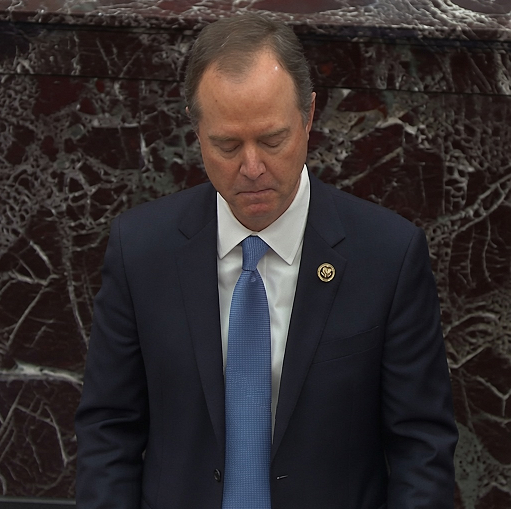
Tense political dispute in the U.S. Senate over what Democratic Senator Adam Schiff characterizes as “Trump’s Iran war,” focusing on its human, financial, and constitutional costs, while Republican and administration officials argue that the conflict is effectively winding down under a ceasefire.
In his Senate floor remarks, Schiff claimed that the ongoing Iran conflict has resulted in significant U.S. casualties, including 13 service members killed and more than 200 injured, as well as the loss of military personnel in high-risk operations such as pilot rescues. He argued that the war has imposed enormous financial costs, diverting resources from domestic priorities like healthcare, childcare, and social services, while also contributing to higher everyday expenses such as fuel, food, and utilities.
Schiff also criticized the Trump administration for conducting military actions without what he described as proper congressional authorization. He pointed to the War Powers Resolution, which requires the president to seek congressional approval for sustained military engagements beyond a set time limit, and argued that lawmakers have not been given adequate opportunity to debate or vote on the conflict. He emphasized that repeated attempts by Senate Democrats to force a vote to end U.S. involvement had failed.
Republicans and administration officials, however, pushed back on the characterization of an ongoing active war. They stated that a ceasefire between the United States and Iran has effectively halted hostilities and that, for War Powers purposes, the 60-day clock may be paused or reset. A senior administration official and reports from agencies such as the Associated Press and Reuters were cited as indicating that no direct exchanges of fire had occurred since early April.
During Senate hearings, officials including Secretary of War Pete Hegseth defended the administration’s interpretation of the ceasefire’s legal implications, while Democratic Senator Tim Kaine disputed that reading, arguing that the statutory timeline likely continued regardless of a pause in fighting.
The article also notes that multiple Senate votes to terminate U.S. involvement in the conflict have failed, although some bipartisan support has emerged, with Senators Susan Collins and Rand Paul joining Democrats in backing one of the measures.
Overall, the piece highlights deep partisan divisions over the scope, legality, and consequences of U.S. military involvement in Iran, as well as ongoing uncertainty about how the ceasefire affects constitutional war powers and congressional oversight.