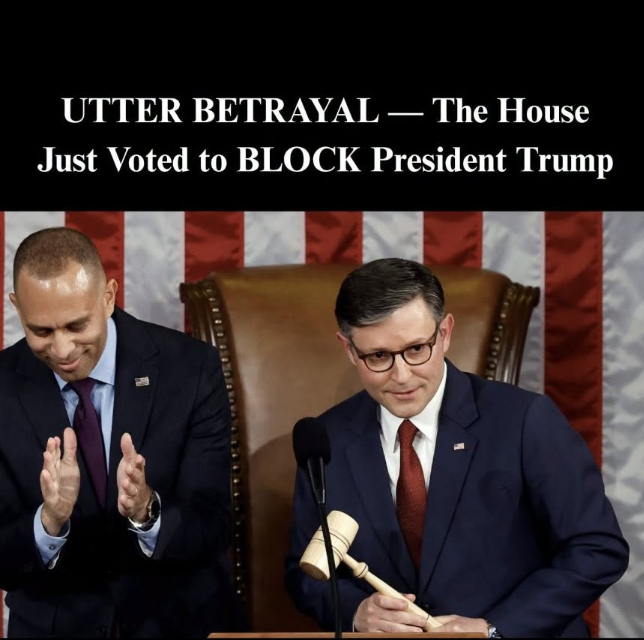
The House of Representatives voted 215–208 to approve a War Powers Resolution aimed at ending U.S. involvement in the conflict with Iran, marking one of the strongest congressional challenges to President Donald Trump’s handling of the war. Four Republicans joined Democrats in supporting the measure, creating a bipartisan majority despite opposition from Republican leadership and the White House.
The vote came after weeks of delays and political maneuvering. House leaders had originally planned to consider the resolution earlier but postponed the vote when it became clear that enough Republicans were prepared to support it. When lawmakers returned from recess, support remained strong enough for the measure to pass.
Supporters argue that Congress should play a larger role in authorizing and overseeing military action abroad. They contend that the conflict has continued for more than 90 days without a clear path to resolution and that lawmakers must reassert their constitutional authority over war decisions. House Democratic leaders celebrated the vote as an important step toward holding the administration accountable and urged the Senate to take up the measure.
Opponents, including House Speaker Mike Johnson, defended the president’s actions, arguing that Iran has posed a longstanding threat to the United States and that the administration is acting to protect American interests and security. The White House has also maintained that restrictions imposed by the War Powers Act raise constitutional concerns by limiting the president’s authority as commander in chief.
Despite its passage in the House, the resolution faces significant obstacles. Similar efforts have struggled to advance in the Republican-controlled Senate, where supporters have not yet secured enough votes for final approval. Even if Congress ultimately passes the measure, President Trump would likely veto it, creating another hurdle for opponents of the conflict.
Still, the vote highlights growing concerns about the war, including its costs, duration, and strategic consequences. While most Republican lawmakers continue to support the administration’s approach, a small group has expressed concerns about the conflict’s direction. Republican Representatives Brian Fitzpatrick, Tom Barrett, Warren Davidson, and Thomas Massie joined Democrats in backing the resolution, with Fitzpatrick stating that lawmakers must “follow the law” regarding congressional war powers.
As fighting continues and diplomatic efforts show little visible progress, the House vote signals increasing debate in Washington over military authority, congressional oversight, and the future of U.S. involvement in the conflict. Whether the resolution gains traction in the Senate remains uncertain, but the vote demonstrates that questions about the war are beginning to cross party lines and attract broader attention in Congress.