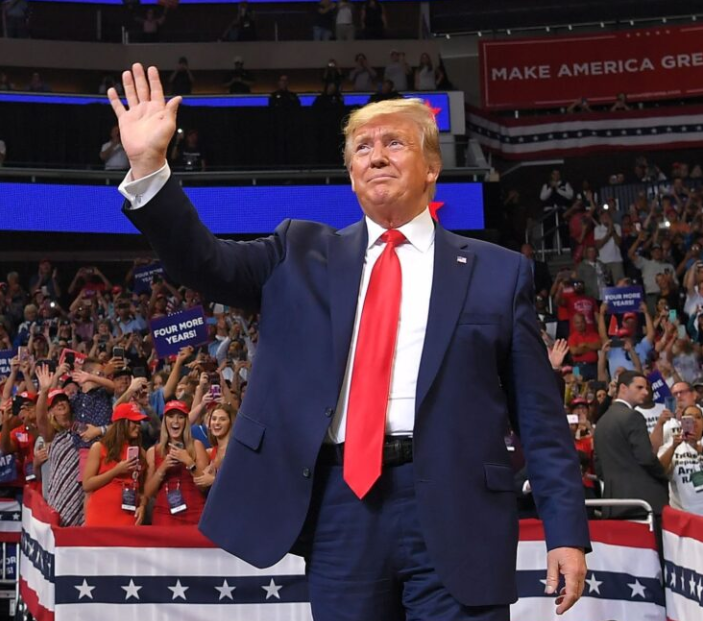
President Donald Trump returned to public attention by announcing a series of class-action lawsuits against three of the largest technology companies in the United States—Facebook, Twitter, and Google—along with their chief executives.
Speaking at his golf club in Bedminster, New Jersey, Trump said he would serve as the lead plaintiff in the lawsuits, which were filed in the U.S. District Court for the Southern District of Florida. He argued that the companies had unfairly censored him and countless other users by restricting conservative voices on their platforms.
During his remarks, Trump accused the companies of engaging in practices such as “shadow-banning,” blacklisting, silencing, and canceling users. He claimed these actions violated free expression and represented an abuse of power by major technology firms. According to Trump, the lawsuits sought to end what he described as politically motivated censorship and to hold the companies accountable for their moderation policies.
Trump’s social media accounts were suspended following the January 6, 2021, attack on the U.S. Capitol, when supporters of the then-president stormed the building as Congress met to certify the 2020 presidential election results.
Facebook and Twitter stated that the suspensions were based on concerns that Trump’s online statements could encourage further violence. Facebook later announced that Trump would remain suspended for at least two years, while Twitter permanently banned his account.
The article argues that Trump repeatedly spread false claims that the 2020 presidential election had been stolen from him despite a lack of evidence. Numerous state and local election officials, judges—including several appointed by Trump—and his own attorney general found no proof of widespread voter fraud that would have changed the election outcome. Nevertheless, Trump continued to insist that he had defeated Joe Biden.
The lawsuits also challenge the protections granted to internet companies under Section 230 of the Communications Decency Act of 1996.
This law generally shields online platforms from liability for content posted by users while allowing them to remove or moderate content they consider objectionable, provided they act in good faith. Trump and several Republican lawmakers have argued that companies should lose or limit these legal protections if they selectively censor users based on political viewpoints.
The article also notes that Facebook CEO Mark Zuckerberg and Twitter CEO Jack Dorsey were named as defendants. Zuckerberg defended Facebook’s decision by saying the risks of allowing Trump to continue using the platform after the Capitol attack were too great, while Dorsey supported Twitter’s permanent suspension. The legal challenge reflected Trump’s broader effort to confront major technology companies over their role in moderating online speech and their influence over public discourse.